Indiana Football PFF Grades vs. Rutgers: Turbo Richard Leads, Defense Controls the Run
Indiana’s 47–15 victory at Rutgers featured explosive offensive production and another strong effort against the run. The PFF reports add detail to how the Hoosiers put that performance together—and where improvement is still needed.
Turbo Richard led the offense with a 91.1 overall grade, Nick Marsh delivered an 88.4 receiving grade, and Indiana’s defense was credited with 21 run stops and just three missed tackles against the run.
From my coaching perspective, the grades reinforce much of what stood out Saturday night. Indiana’s offensive balance created problems for Rutgers, while the defensive front continued to make running the football difficult.
Turbo Richard sets the pace
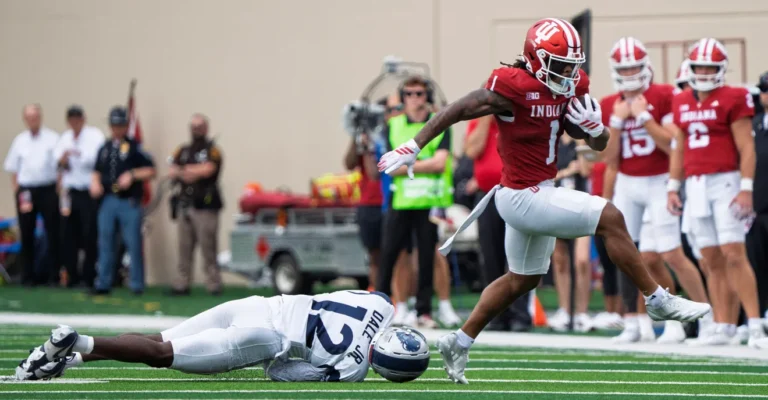
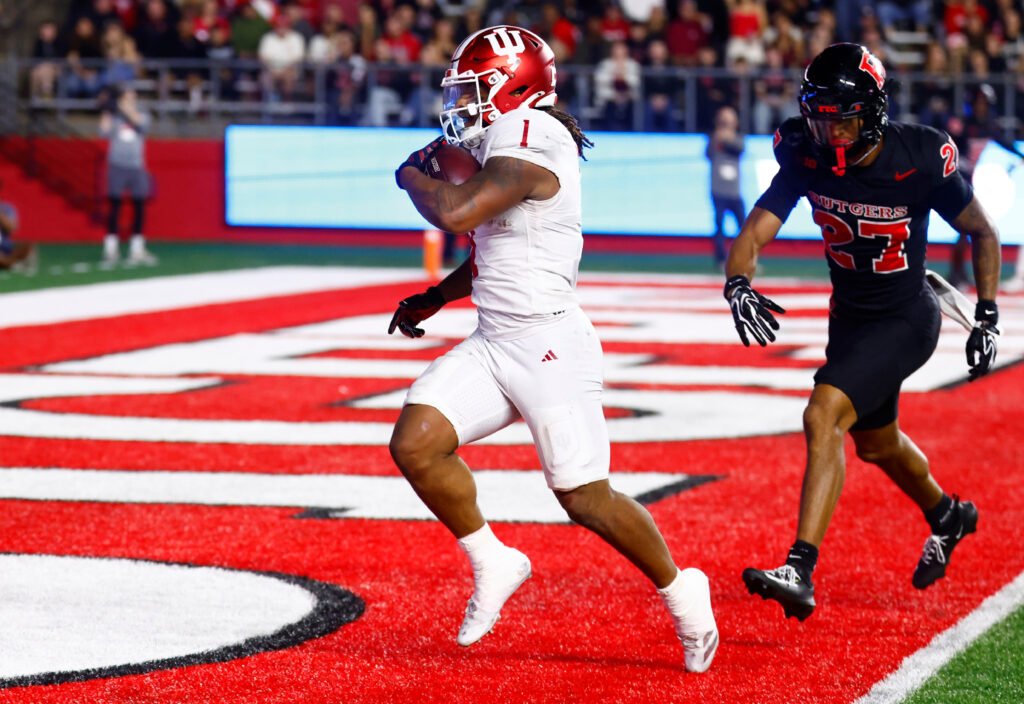
Richard’s 204 rushing yards on 13 carries were impressive enough. His underlying numbers show how he produced them.
PFF credited Richard with 61 yards after contact, seven missed tackles forced and seven runs of at least 10 yards. He earned a 93.6 rushing grade, the standout mark in Indiana’s offensive reports.
That combination matters. Richard generated explosive plays while also creating yardage beyond the blocking.
Lee Beebe Jr. provided another productive option, rushing for 122 yards on 18 carries and earning a 76.6 rushing grade. He added 76 yards after contact and forced five missed tackles.
Together, the backs gave Indiana two different sources of consistent production. Their success also helped keep the offense on schedule and preserved the threat of the run throughout the game.
Marsh and Becker deliver through the air
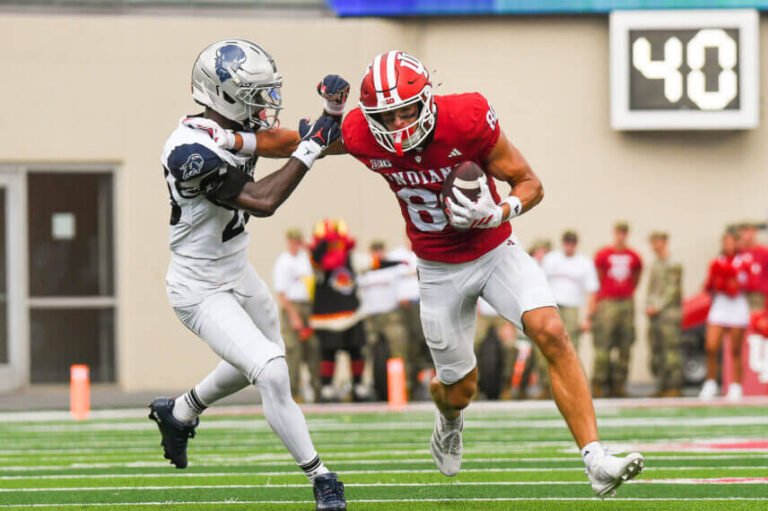
Marsh earned an 86.4 overall offensive grade and an 88.4 receiving grade after catching seven passes for 120 yards and a touchdown.
His production included 61 yards after the catch. That is an important part of his value: completing the pass to Marsh can be the beginning of the damage.
Charlie Becker caught eight passes for 107 yards and two touchdowns, earning a 78.3 receiving grade. Neither receiver was charged with a drop.
Becker’s ability to finish catches and Marsh’s ability to create after the catch gave Hoover dependable targets with different strengths. Their developing connection with Indiana’s quarterback continues to be encouraging.
Hoover’s efficiency starts with staying on schedule
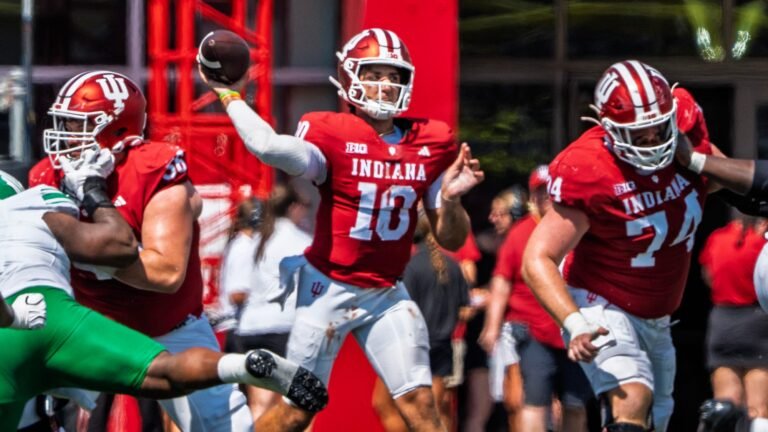
Hoover earned a 76.5 overall offensive grade and a 75.5 passing grade, completing 20 of 27 passes for 251 yards and four touchdowns.
The pressure splits show where Indiana’s offense was most comfortable:
| Hoover’s passing situation | Completions/Attempts | Yards | Touchdowns |
|---|---|---|---|
| Kept clean | 19/23 | 246 | 4 |
| Under pressure | 1/4 | 5 | 0 |
PFF charted pressure on five of Hoover’s 29 dropbacks, or 17.2%. The pressured passing sample is small, but the clean-pocket production was substantial.
In my evaluation, staying on schedule helps Indiana keep that pressure exposure manageable. A credible running game makes the defense account for the handoff. Effective RPO decisions allow Hoover to take an available throw and get the ball out before the rush can develop.
Protection involves the offensive line, but the quarterback’s decisions and the offense’s down-and-distance situations also play a role.
PFF’s play-action category credited Hoover with 13 completions on 17 attempts for 195 yards and two touchdowns. That category does not identify which individual plays were RPOs; my assessment of the opening-drive RPO work remains a coaching interpretation.
Hoover was also credited with one big-time throw and zero turnover-worthy plays.
Pass protection earns recognition
Three linemen finished with pass-blocking grades above 82:
| Player | Pass-blocking grade |
|---|---|
| Joe Brunner | 84.3 |
| Bray Lynch | 82.4 |
| Adeamola Ajani | 82.2 |
Each was credited with zero pressures allowed.
Carter Smith was charged with three pressures, while Drew Evans and Sean Cuono were charged with one apiece. That shows where the report identified protection issues, even during a productive offensive night.
Run-blocking grades were more modest across much of the line. Indiana’s rushing output reflected both the blocking and the backs’ ability to create, as Richard’s and Beebe’s after-contact numbers demonstrate.
Indiana’s run defense finishes its work
The defensive report gives us a more specific way to describe Indiana’s tackling performance.
PFF credited the Hoosiers with 21 run stops and three missed tackles against the run. Rolijah Hardy and Isaiah Jones each finished without a run-play missed tackle.
Jones recorded four run stops and earned a 77.5 run-defense grade. Tobi Osunsanmi also recorded four stops, doing so on 16 run-defense snaps, with a 72.4 run-defense grade.
Joe Hjelle deserves recognition as well. He earned a 78.8 run-defense grade, recording three stops without a missed tackle on 13 run-defense snaps.
Kellan Wyatt contributed a 74.5 run-defense grade and a 79.4 overall defensive grade on 26 total defensive snaps. His involvement provides another reason to feel good about the depth developing across the front.
These numbers support the central takeaway from Saturday: Indiana made running difficult and generally finished its opportunities against the run.
The pass rush contributes, but coverage needs tightening
PFF credited Indiana’s defenders with 14 individual pressures: four sacks and 10 hurries. Those are individual credits and should not be read as 14 separate pressured dropbacks.
Mario Landino led the group with three pressures and earned a 77.7 pass-rush grade. Stephen Daley supplied two sacks, while Osunsanmi and Blake Smythe added one each.
The coverage report shows why the defense still has work ahead.
Jaylen Bell was charged with 94 yards and a touchdown on two completions, while Byron Baldwin Jr. was charged with 68 yards on four completions. Those explosive gains are an area to address as Indiana moves into more demanding matchups.
Hardy and Jones were effective underneath. Across five combined targets, they were charged with only two completions for three yards.
Indiana’s defense controlled much of the game, but limiting explosive passes will be essential against Nebraska.
Special teams offer another area to review
Paddy McAteer earned a 76.1 kickoff grade, while Nico Radicic received a 46.7 field-goal grade.
Those marks identify a positive in the kickoff game and an area requiring attention in the kicking game. As the schedule tightens, those opportunities can carry greater weight.
Coach Griff’s evaluation
The Rutgers grades show an Indiana team with several ways to win.
Richard created explosive runs. Beebe added productive carries and yards after contact. Marsh and Becker delivered through the air, and Hoover took advantage of the opportunities available when the offense stayed on schedule.
Defensively, the Hoosiers stopped the run with very few tackling misses and received contributions throughout the front. The explosive passes allowed remain the clearest area to tighten.
The next challenge is carrying that offensive efficiency and defensive discipline into Nebraska. Indiana has plenty to build on—and specific corrections to make.
Source: PFF Rutgers–Indiana game reports supplied for this evaluation. Grades and charting reflect this game only; they are separate from official NCAA statistics.
Related coverage: Coach Griff’s Josh Hoover evaluation · Indiana’s defensive evaluation