21 Straight Wins — and Indiana Keeps Falling: It’s Time to Question the AP Poll
Indiana did exactly what a Top-10 football team is supposed to do Saturday night.
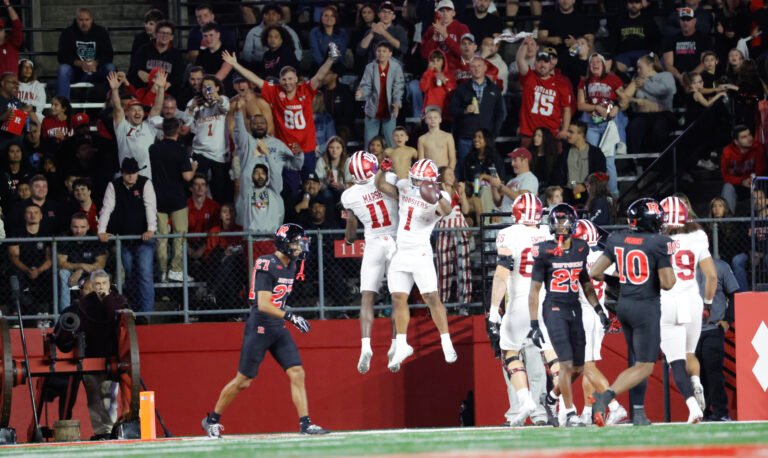
The Hoosiers went on the road in Big Ten play and dismantled Rutgers 47-15. Indiana produced 593 yards of offense, rushed for 329 yards, held Rutgers to 254 total yards and only nine first downs, and extended the program’s winning streak to 21 consecutive games.
The reward from the Associated Press voters?
Indiana dropped another spot.
At some point, it is fair to ask a simple question: What exactly is the AP Poll measuring?
Indiana Keeps Winning — and Keeps Falling
Indiana is 5-0, the defending national champion and riding a 21-game winning streak. Yet the Hoosiers fell to No. 7 in the latest AP Top 25 after one of their most dominant performances of the season.
Alabama moved ahead of Indiana after a 56-23 road victory over then-No. 16 Mississippi State. Alabama deserves credit for an impressive performance. The question isn’t whether Alabama is good enough to move up.
The question is why Alabama moving up requires Indiana moving down.
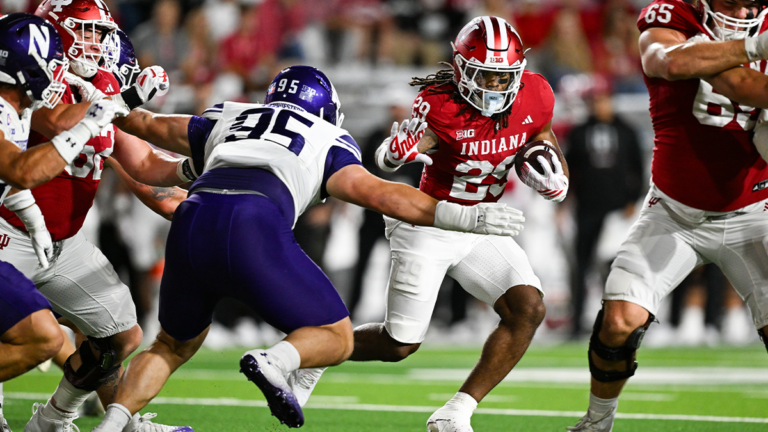
Indiana didn’t survive Rutgers. The Hoosiers overwhelmed them. Josh Hoover threw four touchdown passes. Turbo Richard ran for 204 yards. Indiana averaged 8.4 yards per rushing attempt and won by 32 points on the road.
What more was Indiana supposed to do?
The Coaches See It Differently
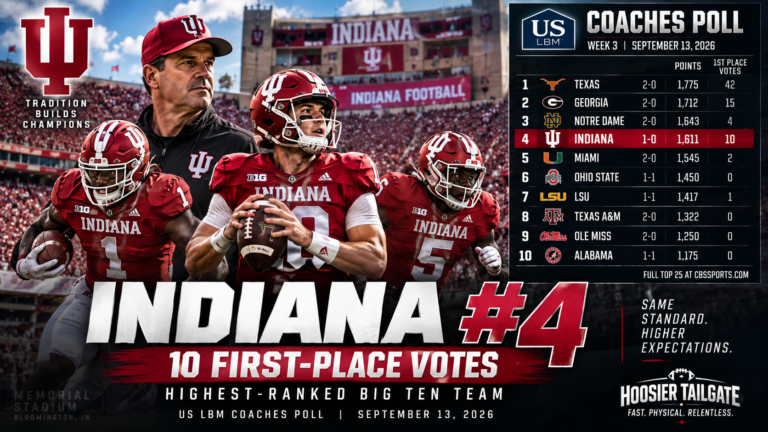
The US LBM Coaches Poll provides an important contrast. The coaches have Indiana at No. 5 and Alabama at No. 7.
That is a four-position swing between the two teams depending upon which poll you examine: Coaches — Indiana 5, Alabama 7. AP — Alabama 6, Indiana 7.
That doesn’t automatically make the Coaches Poll correct. It does demonstrate that Indiana’s position isn’t some obvious consensus dictated by its performance.
The Analytics Don’t Say Indiana Is Overrated
The performance-based numbers make the AP movement even harder to simply accept at face value.
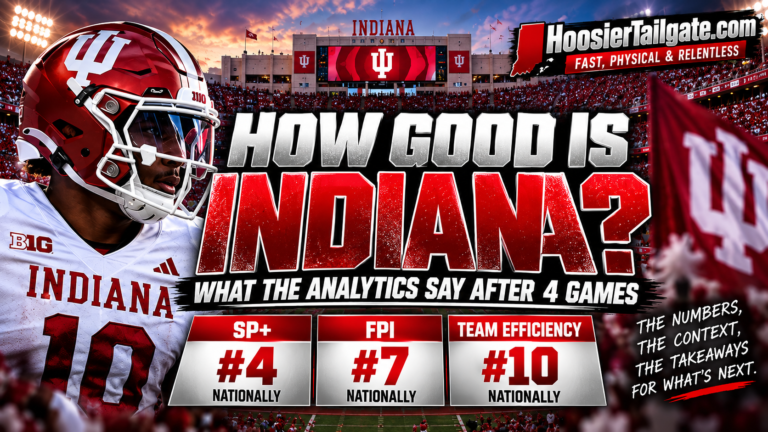
ESPN’s Football Power Index places Alabama No. 6 and Indiana No. 7 — essentially neighbors. ESPN’s overall efficiency ratings place Indiana No. 7 nationally.
But SP+ provides perhaps the most interesting comparison of all.
Indiana is No. 3 nationally in SP+.
Georgia is No. 1. Ohio State is No. 2. Indiana is No. 3, followed by Notre Dame, Miami and Alabama.
Indiana is also No. 4 in SP+ offense and No. 4 in SP+ defense. Alabama owns the No. 1 offense in that metric but ranks No. 15 defensively.
In other words, an opponent-adjusted analytical system isn’t looking at Indiana and seeing a team being propped up by an undefeated record. It sees one of the most complete teams in college football.
Then There Is Notre Dame
Notre Dame remains near the very top of the national polls, but the Irish have had games in which they have been pushed, including Saturday against North Carolina before eventually winning 37-26.
SP+ actually moved Indiana ahead of Notre Dame, with the Hoosiers at No. 3 and the Irish at No. 4.
Again, this isn’t an argument that Notre Dame isn’t an excellent football team. It is an argument for consistency. If Indiana can dominate a conference opponent on the road and still move backward, what performance standard is actually being applied?
The SEC Ranking Feedback Loop
This is where the conversation about the SEC becomes worth having — carefully.
Alabama beating a ranked Mississippi State team is valuable. But we should also ask how much value should be attached to the number beside an opponent’s name when that number was created by the same polling process being used to reward the victory.
A team enters the rankings. Another team beats that ranked opponent. The winner receives a résumé boost for beating a ranked team. That boost then helps justify the winner’s own ranking.
That can create a feedback loop if preseason expectations and early rankings aren’t continuously challenged by actual performance.
The question isn’t whether SEC teams are good. Many clearly are. The question is whether a victory over a team carrying an SEC ranking receives more polling value than an equally dominant — or more dominant — performance elsewhere.
Mississippi State entered the Alabama game highly regarded. Alabama demolished them. Now the next several weeks should tell us much more about Alabama as its schedule gets significantly tougher.
That’s how this should work. Let the games provide the evidence.
21 Straight Has to Mean Something
Indiana isn’t asking voters to project what it might become.
The Hoosiers have already done it.
They won the national championship. They haven’t lost since. They have now won 21 consecutive games.
And Saturday night they went on the road and produced this:
47 points.
593 total yards.
329 rushing yards.
Four Josh Hoover touchdown passes.
59 rushing yards allowed.
Nine Rutgers first downs.
A 32-point Big Ten road victory.
And they fell in the AP Poll.
Maybe Indiana ultimately belongs seventh. Maybe Alabama belongs sixth. Rankings are subjective by definition.
But subjective doesn’t have to mean unquestioned.
At Hoosier Tailgate, we will continue reporting the AP Poll because it remains an important part of the college football conversation. But perhaps it is time to place less weight on the AP ranking as the definitive evaluation of who the best teams actually are and more weight on the entire body of evidence — results, opponent-adjusted analytics, efficiency, film and résumé.
If winning 21 consecutive games, winning a national championship and then demolishing a Big Ten opponent on the road isn’t enough to even hold your position, perhaps the question isn’t what’s wrong with Indiana’s résumé.
Perhaps it’s time to examine what the poll is actually measuring.