Scouting USC: How Indiana Can Slow the Trojans and Win the Matchups
Why USC Is a Dangerous Matchup
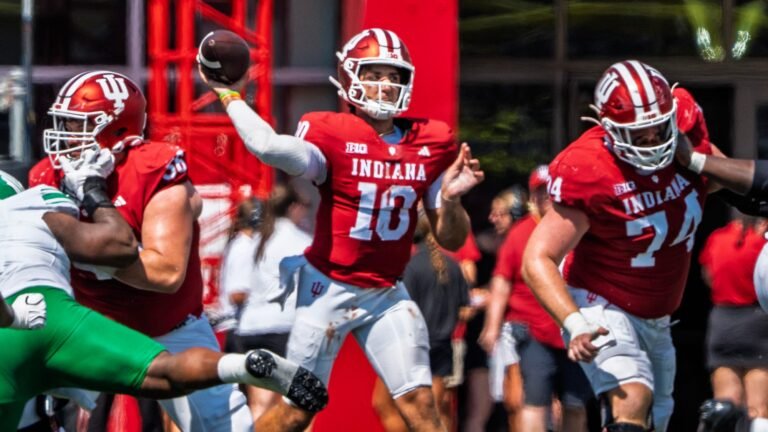
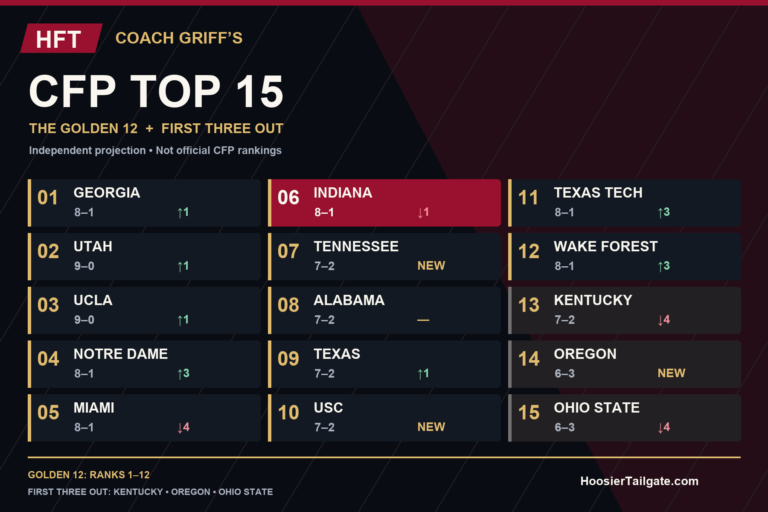
Indiana welcomes USC to Bloomington on November 14 with the Big Ten Championship race and the College Football Playoff picture hanging over every possession. The Trojans enter the matchup at 7–2 and bring a Lincoln Riley offense capable of changing the scoreboard quickly. Indiana is 8–1, with a defense that has established a championship-caliber foundation. This is a matchup of offensive explosiveness against defensive discipline—and a test of whether Indiana’s offense can reclaim its consistency.
Scouting the USC Offense
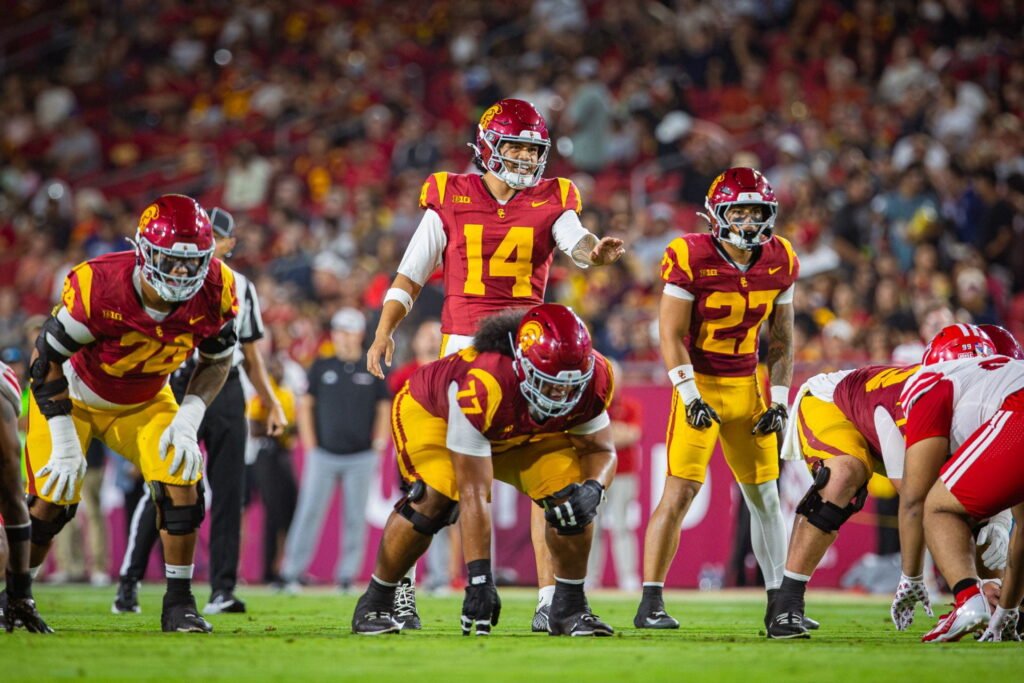
Quarterback Jayden Maiava is the starting point. Riley’s passing concepts challenge defenders horizontally and vertically, using formations, motion, route combinations and protection adjustments to create favorable leverage. USC wants to make the defense declare its intentions, force isolated coverage matchups and punish late rotations. Indiana cannot allow explosive completions to turn routine drives into rapid touchdowns.
The running-back rotation, featuring Waymond Jordan and King Miller among USC’s returning personnel, gives the Trojans an important complementary dimension. Tight end Lake McRee and the receiver group demand attention in the middle of the field as well as on the perimeter. Indiana’s front must force USC into predictable down-and-distance situations without surrendering the run game.
How Indiana Should Defend USC
First, win first down. A manageable second down lets Riley use his complete playbook; second-and-long narrows it. Second, disguise coverage without sacrificing assignment integrity. Third, make pressure productive: sacks, hits and hurried throws matter more than simply sending extra rushers. Fourth, tackle immediately after the catch. Explosive-play prevention is a team-defense responsibility.
Scouting the USC Defense
USC’s defense is a different challenge than its offense. Defensive coordinator Gary Patterson’s influence makes pre-snap identification, run fits, leverage and pressure recognition essential areas of preparation. Indiana must evaluate USC’s front spacing, linebacker movement and coverage adjustments rather than assume the same picture will appear on consecutive downs.
USC’s returning defensive personnel includes edge Braylan Shelby, interior defender Jide Abasiri, linebacker Desman Stephens II and defensive backs Marcellus Williams, Christian Pierce and Kennedy Urlacher. Availability and exact roles must be confirmed against the game-week depth chart. The Hoosiers cannot build their offensive plan around a single matchup or predictable interior runs.
Indiana’s Offensive Blueprint
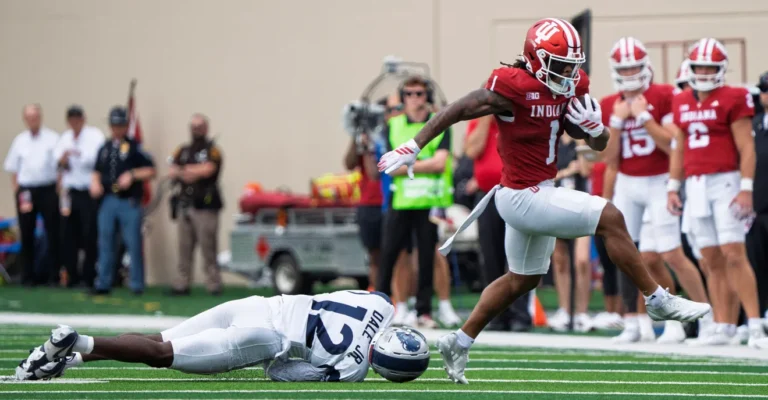
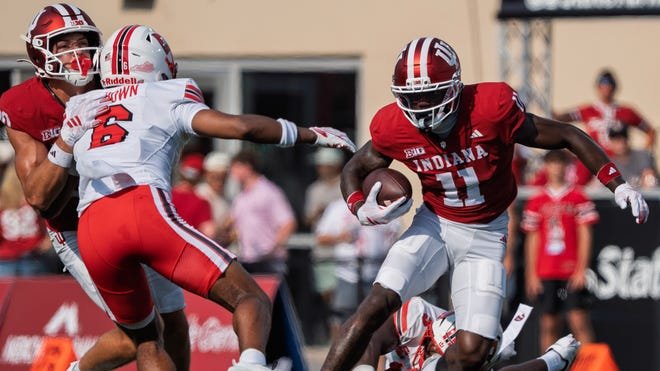
Indiana’s running game must establish physicality and create favorable second downs. Inside zone and duo alone cannot be the entire menu: counter, power, perimeter runs, misdirection and quarterback run elements where personnel allows should all be evaluated. The passing game must threaten vertically; USC should not be able to compress the field without consequence. Protection calls and quarterback health are crucial to that equation.
Josh Hoover’s shoulder recovery and Grant Wilson’s readiness are significant game-week questions. Indiana’s plan must fit the quarterback actually available and healthy, not an idealized version of the offense.
Coach Griff’s Eight Game Objectives
Indiana Offense
- Rush for at least 180 yards.
- Stay on schedule with efficient first-down execution and manageable third downs.
- Take calculated vertical shots to create explosive plays.
- Score 30 or more points.
Indiana Defense
- Hold USC below 100 rushing yards.
- Limit USC to 250 passing yards or fewer.
- Win the turnover battle.
- Record at least three sacks.
The Matchups That Decide the Game
Indiana’s defensive front vs. USC’s protection: pressure without losing rush-lane integrity is vital. Indiana’s secondary vs. USC’s route combinations: communication and tackling determine whether modest completions become explosive gains. Indiana’s offensive line vs. USC’s front: the Hoosiers must win enough early-down blocks to keep the playbook open. Indiana’s receivers vs. USC’s coverage: vertical threats must be credible even when Indiana emphasizes the run.
Coach Griff’s Final Word
Indiana does not need to become a different team. It needs to play complementary football: defense controlling explosives, offense establishing a functional rushing attack and special teams avoiding the field-position mistakes that magnify a thin margin for error. USC has enough offensive talent to punish every breakdown. The Hoosiers have enough defensive talent to make the Trojans work for every point. The difference will come down to execution, explosive plays, and situational football.
Editorial note: Game-week injuries, starters and availability should be updated from the official report before publication.