Indiana Football Is Winning. Stop Poisoning the Experience.
Four years ago, Indiana football fans would have given almost anything for what they have today.
A winning football program.
Not moral victories. Not waiting for basketball season. Not looking at the schedule in September trying to find three more wins just to become bowl eligible.
Winning football.
Curt Cignetti changed the expectations surrounding Indiana football in an extraordinarily short period of time. That’s exactly what successful coaches do.
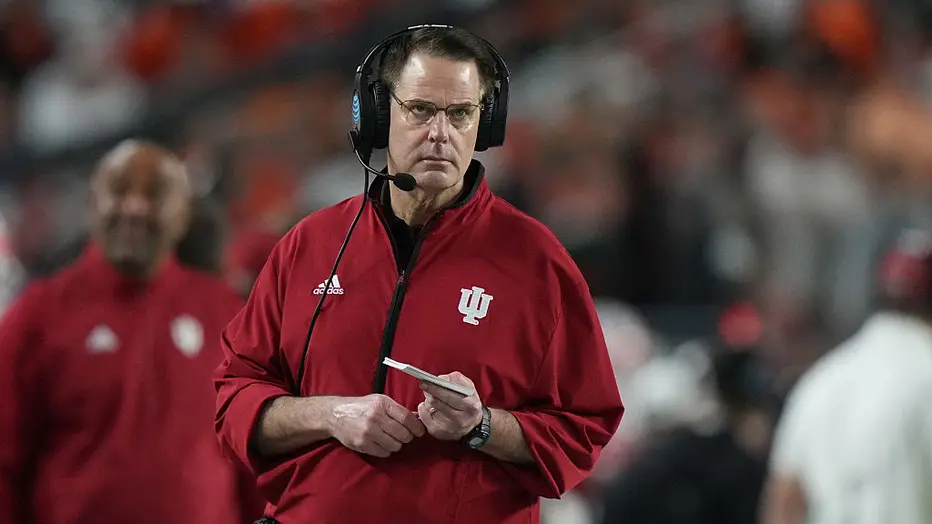
Expectations should be higher. Players should be held accountable. Coaches should be questioned. And when Indiana doesn’t play well, those shortcomings should be analyzed.
But analysis and instant reaction aren’t the same thing.
What Do You Actually Know Five Minutes After the Game?
This is one of my biggest problems with today’s instant-analysis culture.
I’ve spent 28 years coaching college football. There is a reason coaches don’t make definitive evaluations of every player and every assignment based solely on what they thought they saw from the sideline.
We watch the film.
And not simply the television broadcast.
Coaches traditionally evaluate multiple angles because one angle rarely tells the entire story.
You might see a safety 10 yards away from a receiver catching a pass and immediately decide the safety blew the coverage.
Maybe he did.
Or maybe the corner was supposed to carry the route. Maybe there was a communication error before the snap. Maybe another defender didn’t make the proper rotation. Maybe the coverage changed based upon motion. Maybe the quarterback extended the play and the coverage structure broke down.
Until you see the entire play, you don’t know.
The same applies to quarterback play.
It’s easy to watch an RPO on television and say, “Hoover made the wrong read.”
Okay.
Who was the conflict defender?
What was Hoover’s pre-snap indicator? What did that defender do after the snap? What was the protection? What was the route adjustment? What was the coaching point Indiana gave its quarterback for that particular look?
Now we’re analyzing football.
There is nothing wrong with giving an immediate postgame reaction. That’s part of sports media.
But there’s a significant difference between saying, “This concerned me tonight, and I want to see the film,” and declaring minutes after a game that Indiana has major systemic problems.
Reaction Isn’t Film Study
That distinction becomes especially important when the presentation repeatedly escalates the language.
“I’m more concerned than ever.”
“Indiana isn’t where it needs to be.”
“Josh Hoover’s inconsistency is a problem.”
“Indiana’s defense has major problems.”
“Better quarterbacks are coming.”
“Did Indiana get exposed?”
“Major questions in the secondary.”
Those are substantial conclusions.
If we’re going to make them, let’s support them.
Put the film on.
Show me the coverage. Show me the leverage. Show me the quarterback’s read. Show me the defensive fit. Show me whether the same problem occurred repeatedly.
Because getting beaten on a play does not necessarily mean you’re structurally unsound.
And struggling with something for a quarter doesn’t automatically mean you’ve been “exposed.”
Which Is It?
There’s something else that bothers me about this style of commentary: the contradictions.
You can’t spend part of your postgame show telling people that a victory “sometimes doesn’t feel like a win” and then later tell those same people Indiana should be celebrated for winning without explaining how those positions fit together.
Which is it?
If you’re going to criticize Indiana’s performance, criticize it. Explain precisely what wasn’t good enough.
If you’re going to give Indiana credit for overcoming adversity and winning a Big Ten football game, explain that too.
Those ideas actually can coexist.
Indiana can play poorly in certain areas and deserve credit for winning anyway.
But that requires nuance.
What bothers me is when the pendulum swings back and forth because every segment needs another dramatic conclusion.
That’s not helping fans understand football. It’s creating emotional whiplash.
Remember Where Indiana Came From
This is the part I don’t want Indiana fans to forget.
It wasn’t very long ago that conversations surrounding Indiana football sounded completely different.
People questioned whether Indiana could ever consistently win. People questioned the program’s investment. People joked about Indiana football. There were even voices arguing that Indiana should essentially accept its place in college football and concentrate its resources elsewhere.
Now?
Indiana wins a Big Ten football game 29–23 and apparently we need to conduct an autopsy.
Think about how dramatically the standard has changed.
And Curt Cignetti deserves enormous credit for changing it.
But here’s the danger:
Higher expectations cannot become an expectation of perfection.
If Indiana wins by 30, the opponent wasn’t good enough. If Indiana wins by six, something must be wrong. If the quarterback misses a read, he’s inconsistent. If the secondary busts a coverage, the defense has major problems. If Indiana doesn’t dominate an opponent exactly the way someone expected, suddenly we’re asking whether the Hoosiers have been “exposed.”
At some point, winning apparently isn’t enough unless Indiana wins according to somebody else’s script.
That’s a miserable way to experience college football.
Stop Comparing This Team to Last Year’s Team
This one especially needs to stop.
Last year’s team is gone.
Different players. Different personalities. Different strengths. Different weaknesses. Different chemistry. Different opponents. Different circumstances.
Yes, coaches study previous seasons. Yes, returning players establish standards. And yes, historical performance can provide useful context.
But the 2026 Indiana Hoosiers aren’t required to reproduce the 2025 team’s path to success.
This team has to discover its own identity.
Maybe this Indiana team wins differently. Maybe it runs the football more. Maybe it has to survive some close games. Maybe Hoover develops throughout the season. Maybe the secondary needs several weeks to develop its communication. Maybe injuries force younger players into larger roles.
That’s what a season is.
You don’t know everything about a football team in September.
Neither do the coaches. They’re still learning about their team too.
The Scoreboard Still Matters
Here’s something incredibly complicated that apparently needs to be said:
Indiana won the football game.
29–23.
That doesn’t erase the mistakes.
It doesn’t mean Cignetti walks into the meeting room, turns on the film and tells everybody how wonderful they were.
Quite the opposite.
There will be corrections. There will probably be some uncomfortable meetings. That’s coaching.
But coaches understand something that sometimes gets lost in the race for postgame clicks:
The scoreboard and the film answer two different questions.
The scoreboard asks:
Did you win?
The film asks:
What do we need to correct so we can win again?
Indiana answered the first question Friday night.
Now Cignetti and his staff will answer the second.
Don’t Poison Winning
Indiana football fans waited a long time for this.
Enjoy winning. Demand excellence. Expect improvement. Criticize bad football when you see it.
But don’t allow somebody else’s need for an immediate dramatic reaction to convince you that every imperfection is evidence of impending disaster.
And those of us who analyze football have a responsibility too.
If we’re going to tell people a quarterback made the wrong read, show them why.
If we’re going to say a secondary has major problems, identify them.
If we’re going to say a team was “exposed,” demonstrate the repeatable structural weakness that was exposed.
Otherwise, call it what it is:
A postgame reaction.
There’s nothing wrong with that.
Just don’t confuse it with film study.
Indiana beat Northwestern 29–23.
The Hoosiers weren’t perfect.
They don’t have to be.
They needed to be better than Northwestern when the clock reached zero.
They were.
Now turn on the film, make the corrections and go try to win the next one.
Fast. Physical. Relentless.