Indiana’s Championship Dreams Take a Devastating Hit: Washington Stuns Hoosiers 27–24 in Overtime
By Coach Shannon Griffith | Hoosier Football Tailgate
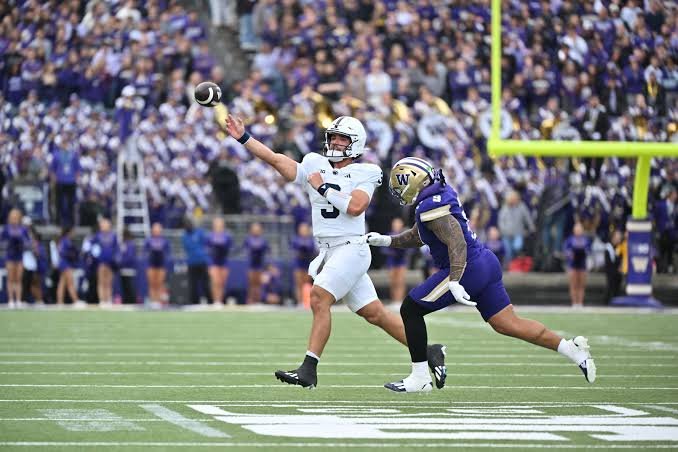
SEATTLE — For the first time in Curt Cignetti’s Indiana tenure, the Hoosiers have lost to an unranked opponent. Washington defeated Indiana 27–24 in overtime Saturday at Husky Stadium, handing Indiana its second loss and dealing a devastating blow to its College Football Playoff and Big Ten Championship hopes.
This wasn’t a game lost simply because Paddy McAteer missed a 37-yard field goal wide left in overtime. Indiana failed to execute consistently on offense, surrendered explosive plays, committed three costly personal fouls, and again struggled in the kicking game. The defeat ended Indiana’s 29-game winning streak against unranked opponents.
The Numbers Tell the Story
| Category | Indiana | Washington |
|---|---|---|
| Final score | 24 | 27 |
| Total offense | 392 | 443 |
| Rushing yards | 152 | 189 |
| Passing yards | 240 | 254 |
| First downs | 16 | 25 |
| Third downs | 2–15 | 6–17 |
| Fourth downs | 3–4 | 1–2 |
| Penalties | 3–45 | 2–1 |
| Time of possession | 28:38 | 31:22 |
The most disturbing numbers: Indiana converted just 13.3% of its third downs, Washington recorded 25 first downs, and a defense that has carried this team surrendered 443 yards. Washington ran 74 plays to Indiana’s 66 and possessed the ball for more than 31 minutes. Those are not championship-caliber numbers.
An Offense That Continues to Struggle
Indiana finished with 392 yards, but 74 came on one Grant Wilson touchdown pass to Charlie Becker in the first quarter—nearly 19% of the entire offensive output. Explosive plays can disguise a lack of drive-to-drive efficiency. Two third-down conversions in 15 attempts is an offensive failure that places enormous pressure on the defense.
Indiana managed only 16 first downs. The offense repeatedly fell behind schedule and lacked dependable answers in third-and-long situations. Lee Beebe Jr. led the rushing attack with 94 yards, including a 42-yard run, but the Hoosiers did not establish reliable interior rushing production.
Injuries compounded the challenge. Center Bray Lynch exited, right tackle Adedamola Ajani battled injury, and right guard Joe Brunner was already unavailable. Yet injuries cannot excuse every failure. Indiana needs greater diversity in its run game—power, counter, perimeter concepts and designed quarterback runs—to create manageable down-and-distance situations. Wilson’s five-yard touchdown run demonstrated the value of that dimension.
Cignetti Makes Another Quarterback Change
Grant Wilson started after his performance against USC, but when the offense stalled, Cignetti turned back to Josh Hoover during the third quarter. Wilson accounted for Indiana’s first two touchdowns: the 74-yard strike to Becker and a five-yard keeper. Hoover provided a spark, helping lead an eight-play, 70-yard possession capped by McAteer’s 34-yard field goal, then finding Nick Marsh for a 35-yard touchdown to put Indiana ahead 24–17 with 9:06 left.
But the offense failed to close out the game in regulation and failed to earn a first down in overtime. Who is Indiana’s quarterback moving forward? Wilson brings mobility and a designed-run threat. Hoover offers experience and explosive passing capability. Neither has consistently solved the offense’s efficiency problems. With Purdue and postseason positioning ahead, Cignetti must establish a coherent plan that fits the chosen quarterback’s strengths.
Indiana’s Defense Finally Breaks
Washington gained 443 yards, including 189 on the ground. Demond Williams Jr. completed 24 of 41 passes for 227 yards and rushed for 88. His 65-yard touchdown run on third-and-16 during Washington’s opening possession exposed a recurring problem: Indiana’s containment of mobile quarterbacks.
Washington amassed 192 yards in the first quarter and 264 by halftime. Indiana adjusted and kept the Huskies scoreless in the third, but couldn’t deliver the decisive fourth-quarter stop. Washington drove 74 yards in seven plays, with Williams finding Decker DeGraaf for a 20-yard touchdown with 3:34 remaining to tie the game at 24.
Three Personal Fouls: Forty-Five Yards
Indiana committed three penalties for 45 yards, all personal fouls. Nearly half a football field in avoidable mistakes is unacceptable for a program built on discipline and accountability. Aggressive defense is essential; undisciplined aggression is a liability. The defense did not lose this game alone, but it contributed significantly to the result.
Special Teams: A Problem That Can No Longer Be Ignored
Starting kicker Nico Radicic had his 46-yard third-quarter field goal attempt tipped at the line because the ball did not gain sufficient elevation. Cignetti turned to Paddy McAteer, who converted a 34-yard attempt for a 17–14 Indiana lead.
In overtime, Washington’s Tyler Robles made a 46-yard field goal to put the Huskies ahead 27–24. Indiana failed to gain a first down and McAteer’s 37-yard attempt missed wide left, ending the game.
The failures were different—trajectory on Radicic’s attempt, accuracy on McAteer’s—but both illustrate the lack of reliability in Indiana’s kicking operation. The decision to change kickers also raises questions about the staff’s confidence in its personnel. Neither kicker should shoulder all the blame for a defeat built across three phases, but special teams once again failed to help Indiana win.
A Historic Streak Comes to an End
Indiana entered with 29 consecutive wins against unranked opponents. Saturday marked Cignetti’s first loss to an unranked opponent at Indiana and ended his perfect record when leading in the fourth quarter. The streak reflected the program’s remarkable transformation. Its end shows how narrow the winning margin becomes when execution breaks down.
College Football Playoff: Is Indiana Outside Looking In?
Indiana entered the game 9–1 and No. 8 in the CFP rankings. At 9–2, with losses to Ohio State and unranked Washington, its postseason résumé faces far greater scrutiny. The win over ranked USC still matters, as does the defense’s season-long performance. But the committee will evaluate the full body of work, strength of schedule, offensive inconsistency, and competition from other two-loss contenders.
Indiana is not mathematically eliminated from the 12-team playoff. But even a 10–2 finish would leave the Hoosiers depending on other results and committee comparisons—exactly the position they wanted to avoid.
UCLA’s Loss Creates More Big Ten Chaos
Previously unbeaten UCLA fell to Michigan 18–16 in triple overtime, while Ohio State lost at Nebraska 31–28. Indiana sits at 6–2 in Big Ten play, UCLA at 7–1, with Oregon and Iowa also factors in the title race. UCLA’s loss created an opening, but Indiana failed to capitalize. Conference tiebreakers and other results now matter; the Hoosiers no longer control their own championship destiny.
Coach Griff’s Assessment: The Warning Signs Were There
The problems did not suddenly appear in Seattle. Against Minnesota, Indiana survived. Against USC, explosive plays were enough. Against Washington, offensive inconsistency, quarterback uncertainty, defensive lapses and special teams failures finally combined into defeat.
The coaching staff must answer difficult questions. Why does third-down execution remain so poor? Why is the quarterback position unsettled? Why do special teams issues persist? Why does the defense continue to struggle containing mobile quarterbacks? These are football questions that require football answers, not excuses.
Purdue Becomes a Must-Win Game
Indiana returns to Memorial Stadium November 28 for the Old Oaken Bucket game. A third defeat would almost certainly end realistic CFP hopes. But simply beating Purdue will not erase the concerns. The priorities are clear:
- Third-down efficiency: Stay ahead of the chains and execute consistently.
- Quarterback stability: Choose a direction and build around the quarterback’s strengths.
- Rushing attack: Improve interior blocking and diversify run concepts, including quarterback runs.
- Defensive discipline: Eliminate personal fouls and improve mobile-QB containment.
- Special teams: Restore confidence in field goal execution.
A 10–2 regular season would be outstanding for many programs. Cignetti has raised Indiana’s standard: the expectation now is to compete for championships.
Final Thoughts: Indiana Let an Opportunity Slip Away
Washington deserves credit. Demond Williams Jr. was a difference-maker, and the Huskies executed when the game was on the line. But Indiana led in the fourth quarter, had chances to finish in regulation and to extend overtime, and failed to capitalize.
This wasn’t about one missed field goal. It was about an offense that couldn’t convert third downs, a defense that surrendered too many yards and costly penalties, and a special teams unit that faltered in a decisive moment.
Indiana’s championship aspirations are not officially over. But the Hoosiers no longer control their postseason destiny—and that may be the most disappointing reality of all.
— Coach Shannon Griffith, Hoosier Football Tailgate