Indiana Football at 6–1: The Numbers Say National Contender, but the Work Is Far from Finished
By Coach Griff | HoosierTailgate.com | October 19, 2026
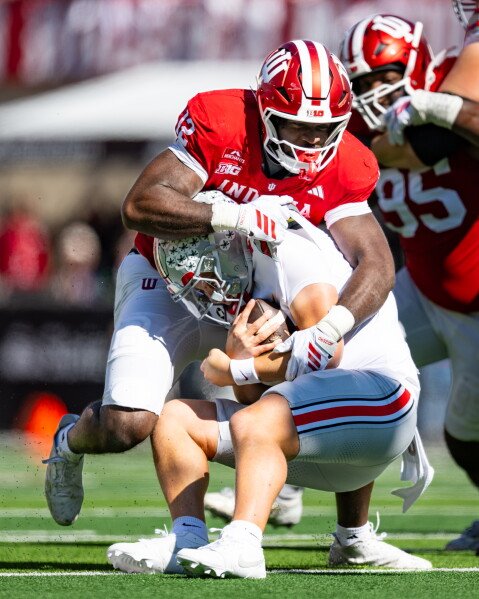
Indiana is 6–1, ranks fifth nationally in both ESPN FPI and SP+, and remains a serious College Football Playoff contender. But Saturday’s 19–15 loss to Ohio State exposed areas that must improve if the Hoosiers intend to win championships.
Seven games into the season, the question is no longer whether Indiana belongs among college football’s best. The question is whether Curt Cignetti’s team can become complete enough to beat the nation’s best when every possession matters.
The numbers say Indiana belongs
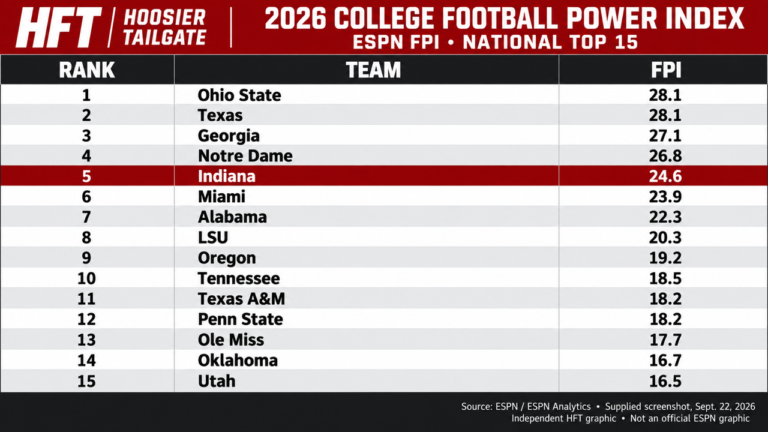
ESPN’s Football Power Index rates Indiana No. 5 nationally (+25.4), and SP+ also places the Hoosiers No. 5 (+23.6). ESPN lists Indiana sixth in Strength of Record, with a Strength of Schedule ranking of 24th. These measurements assess different things: FPI and SP+ are predictive measures of team quality, while Strength of Record examines what a team has accomplished against its schedule.
| Measurement | Indiana |
|---|---|
| ESPN FPI | No. 5 (+25.4) |
| SP+ | No. 5 (+23.6) |
| Strength of Record | No. 6 |
| Strength of Schedule | No. 24 |
| FPI overall efficiency | No. 6 |
| FPI offensive efficiency | No. 3 |
| FPI defensive efficiency | No. 9 |
| FPI special teams efficiency | No. 111 |
Indiana’s defensive SP+ ranking is No. 2 nationally, while its offensive SP+ ranking is No. 12. Those figures support the conclusion that the Hoosiers are a legitimate contender. They also reveal a substantial imbalance in the third phase of the game.
A championship-caliber defense with a specific challenge
Bryant Haines’ defense has been the foundation of Indiana’s success. The defensive front has repeatedly disrupted running games, generated pressure and forced opponents to earn yards. Holding Ohio State to 19 points should have given Indiana an opportunity to win.
One concern remains the handling of mobile quarterbacks. Against Northwestern and Nebraska, quarterback movement and designed runs challenged Indiana’s defensive integrity. Nebraska quarterback Anthony Colandrea’s 38-yard touchdown on a quarterback counter was a particularly clear example. Pressure matters, but so does maintaining rush-lane discipline and accounting for the quarterback as a runner.
Josh Hoover: Judge seven games, not one
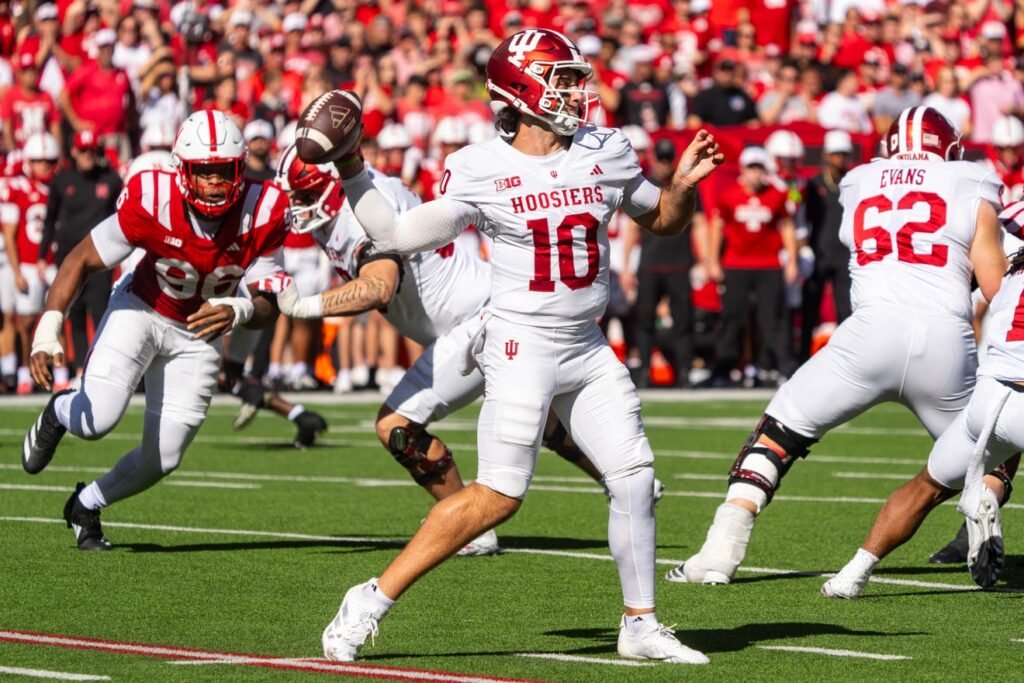
Following the Ohio State loss, criticism of Josh Hoover is understandable. Calls to bench him, however, deserve to be tested against the full body of evidence—not a single afternoon.
Through seven games, Hoover stands second nationally in ESPN Total QBR at 89.1, just behind Miami’s Darian Mensah at 89.4. Indiana also ranks third in ESPN offensive efficiency. Those are not the statistical markers of a quarterback incapable of running this offense.
Against Ohio State, Hoover completed 20 of 40 passes for 296 yards and a touchdown. There were missed throws and situational opportunities that merit scrutiny. Yet nothing in his seven-game statistical profile supplies a compelling evidence-based reason to bench him. Criticizing decisions and mechanics is part of evaluation; replacing a quarterback requires a broader case.
Quarterback preparation: What we know and what we don’t
Another legitimate coaching question concerns preparation. Chandler Whitmer incorporated virtual-reality work into Fernando Mendoza’s development. How does Tino Sunseri structure Hoover’s weekly preparation? Is VR used with the same frequency and purpose? How are defensive looks and decision-making rehearsed?
We do not have access to Indiana’s quarterback meeting room or its internal preparation schedule. It would be speculation to declare one approach superior or suggest Hoover is being prepared inadequately. What we can say is that his season-long production is excellent and the staff should continue refining his situational execution.
Offensive efficiency versus offensive versatility
Indiana’s production has been impressive, but the 73 rushing yards against Ohio State brought a familiar concern into focus. The offense leans heavily on inside zone and duo. Those are sound concepts; the issue is whether Indiana has enough complementary answers when a physical front controls the interior.
Counter, power, perimeter runs, motion and misdirection can force defenses to defend more than the space between the tackles. Nick Marsh and Charlie Becker provide personnel capable of stressing defenses horizontally as well as vertically. Against elite opponents, the offense must be able to adapt when its preferred runs are contained.
Special teams: From a weapon to a missed opportunity
This is not just a kicking problem. It is a field-position and complementary-football problem.
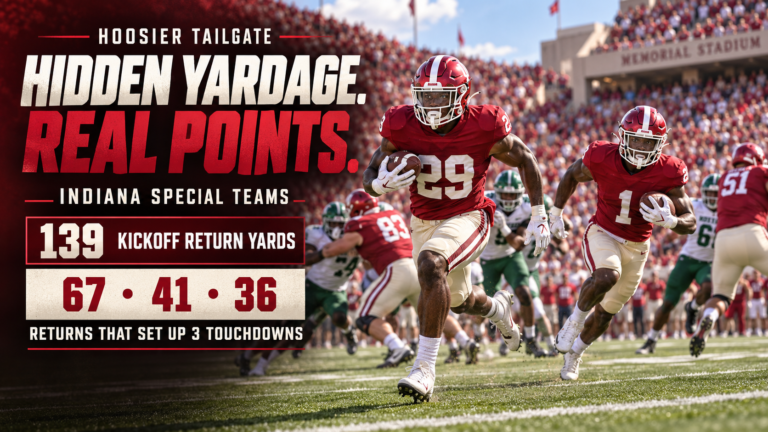
During the 2024 and 2025 regular seasons, Indiana produced blocked punts, explosive return opportunities and points created by the kicking game. In 2024, the Hoosiers blocked punts against Maryland and Michigan State. Documented 2025 regular-season blocks came against Kennesaw State, Illinois and Iowa, including a blocked punt returned for a touchdown against Illinois. This comparison intentionally excludes postseason blocks against Oregon in the Peach Bowl and Miami in the national championship game.
That production created short fields, altered momentum and sometimes put points directly on the scoreboard. The third phase helped the other two phases win.
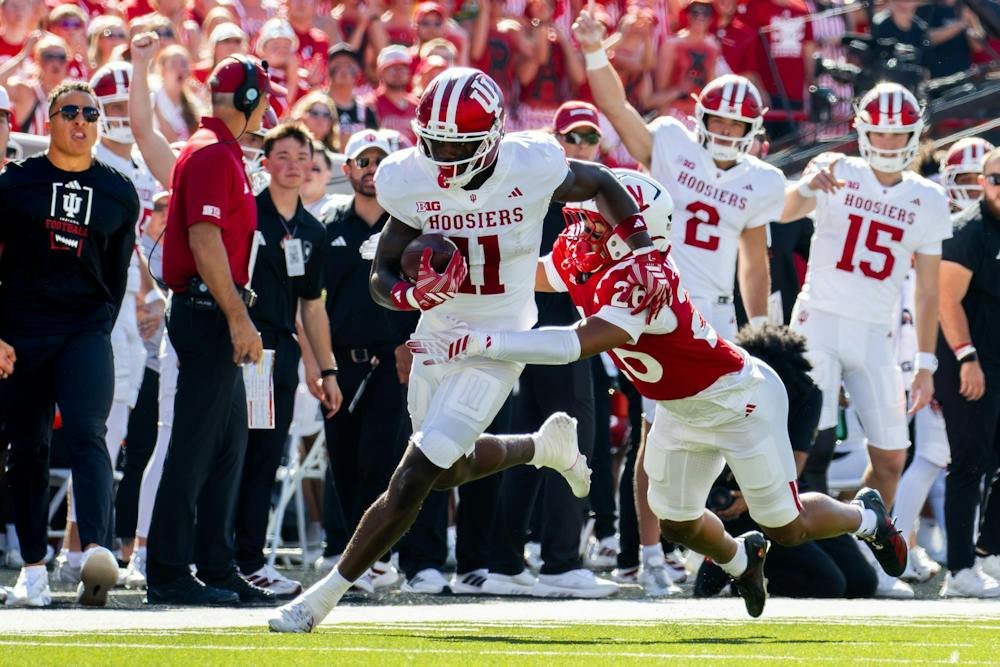
Through seven games in 2026, we have not identified a blocked punt, a touchdown off a blocked punt or a punt-return touchdown. Those zero-count observations should be reconciled against the complete official game logs, but they align with a troubling analytical indicator: Indiana is No. 111 nationally in ESPN special teams efficiency, compared with No. 6 in 2025.
The punt return game needs a more aggressive mindset
From my observation, too many punts are being allowed to hit the ground and roll, while fair catches have become a frequent outcome. There are absolutely times to fair-catch a ball or let it go. Ball security, hang time, coverage proximity and the returner’s position must drive the decision. But an overly passive approach can concede valuable yards before the offense ever snaps the ball.
A ball fielded near the 25 that instead bounces toward the 12 changes the entire possession. Against a defense such as Ohio State’s, those yards are significant. The difference between a drive beginning near midfield and one starting deep in your own territory affects play-calling, risk, the number of first downs required and scoring probability.
Indiana needs an aggressive but disciplined return philosophy—not recklessness, and not simply accepting poor field position. That also means examining pressure packages, return setup, coverage execution and whether opponents are adjusting to Indiana’s past success. We cannot identify the cause without the full film and underlying field-position data, but the decline in impact deserves attention.
Special teams should be a weapon, not merely a phase that exists between offense and defense.
How Indiana compares nationally
In the supplied October 19 analytics, Ohio State ranks first in both FPI and SP+, followed in various orders by Notre Dame, Georgia and Miami. Indiana is fifth in both systems. That places the Hoosiers firmly in the top tier of predictive national contenders even after a four-point loss to Ohio State.
The task now is to convert contender-level performance into championship-level execution: finish drives, protect the football, create more varied run-game answers and reclaim field position through special teams.
College Football Playoff projections
ESPN FPI’s October 19 projections give Indiana an 80.5% probability of making the College Football Playoff, a 28.2% chance of winning the Big Ten, a 31.5% chance of winning its remaining regular-season games, a 20.7% chance of reaching the national championship game and a 10.6% chance of winning the national title. Its projected regular-season win total is 10.7.
| FPI projection | Indiana |
|---|---|
| Make College Football Playoff | 80.5% |
| Win remaining regular-season games | 31.5% |
| Win Big Ten | 28.2% |
| Reach national championship game | 20.7% |
| Win national championship | 10.6% |
In the ESPN Playoff Predictor scenario examined for this article, Indiana finishing 11–1, reaching the Big Ten Championship Game and losing was associated with approximately a 99% CFP probability. This is a model scenario, not a guarantee; the separate first-round-bye figure requires scenario-specific confirmation and is not treated here as a settled projection.
The Big Ten title race: Indiana still has a path
Ohio State and UCLA are both 4–0 in conference play, while Indiana and USC stand at 3–1. If the Buckeyes and Bruins win out, they control the two berths in Indianapolis. Indiana, following its head-to-head loss to Ohio State, needs help.
The straightforward objective is to win its final five games and finish 8–1 in Big Ten play. If Ohio State finishes 9–0 and UCLA loses once to Minnesota, Michigan or USC, the Bruins could also finish 8–1. Indiana and UCLA share four conference opponents—Purdue, Minnesota, Michigan and USC. If Indiana beats all four and UCLA loses to one of those three remaining common opponents, Indiana would have the stronger common-opponent record in a two-team tie.
That creates a potential path to an Indiana–Ohio State rematch in Indianapolis. The caveat matters: additional tied teams can change the tiebreaking procedure, so no berth should be declared clinched from that scenario alone.
Indiana’s task is simpler than the permutations: win the games on its schedule, beginning at Michigan, and force the other contenders to keep pace.
Coach Griff’s Final Word
The numbers say Indiana belongs among the nation’s best. The film says there is still work to be done.
Hoover should be judged on seven games of production, not reduced to one loss. The offense must find more answers against physical fronts. The defense must remain dominant while tightening its response to quarterback run threats. And the special teams must rediscover the aggressive, disciplined approach that previously produced blocked punts, explosive returns and meaningful field-position advantages.
Against elite competition, every missed opportunity matters. A missed kick, a ball allowed to roll another 12 yards, a third-down throw or an unblocked defender can decide the outcome.
Indiana still has a path to Indianapolis and a strong opportunity to reach the College Football Playoff. What happens next depends on whether the Hoosiers can become a more complete football team.
Fast. Physical. Relentless.
Coach Griff spent 28 years coaching college football, including service as a head coach and on the NCAA Division III national playoff selection committee.