The Protect College Sports Act: Can Washington Fix College Sports Without Changing What Makes It Great?
College athletics has spent the last several years moving from one major change to the next: name, image and likeness compensation, the transfer portal, conference realignment, the House settlement and direct revenue sharing with athletes. Now Congress is attempting to provide something the industry has repeatedly requested—a national framework.
On September 28, the U.S. Senate passed the Protect College Sports Act of 2026, S. 4668, by a bipartisan 77-22 vote. The Senate-passed bill now moves to the House. It is not law yet, and that distinction matters.
There are legitimate reasons for Washington to address college athletics. Athletes deserve enforceable rights. Predatory agents deserve scrutiny. Schools need clarity on NIL, transfers, eligibility and revenue sharing. Women’s and Olympic sports need protection. A national system may be more workable than a patchwork of state laws, court decisions and temporary rules.
But federal involvement does not automatically mean federal improvement.
That leads to the question I keep coming back to as a football coach and analyst: Can Washington create stability without legislating away some of the competitive opportunity that has made college football so compelling?
What Congress Is Trying to Fix
The Senate-passed legislation addresses NIL rights, agent regulation, academic and medical protections, health and safety standards and national rules intended to provide greater stability. Its stated purpose includes promoting fair competition in intercollegiate athletics.
Those are serious issues. The current system is complicated, expensive and frequently uncertain. Coaches build rosters while transfer rules and compensation structures evolve. Athletes and families navigate contracts, taxes, agents and NIL agreements. Athletic departments are trying to fund broad sports programs while adding direct athlete compensation to their budgets.
Some national consistency could help. But before college football decides that more structure automatically means a better sport, it should examine what has happened on the field.
What If Competitive Balance Is Already Improving?
For decades, college football’s economic structure generally favored the programs that already possessed the biggest stadiums, strongest recruiting bases, largest donor networks and most recognizable national brands. The traditional powers did not win every championship, but breaking into that group was extraordinarily difficult.
The last several seasons have challenged some of those assumptions.
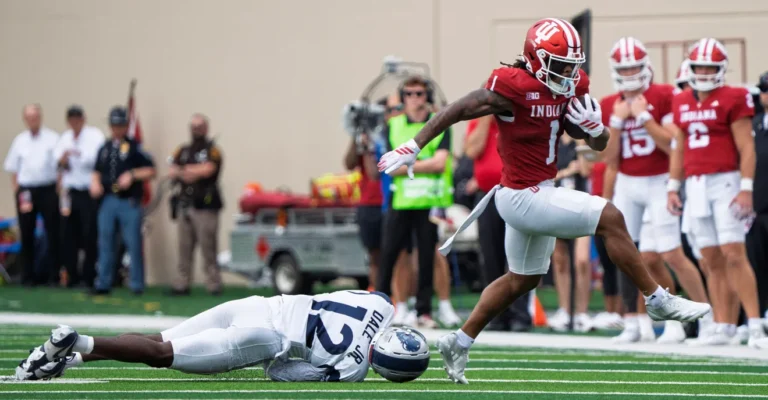
Indiana is the most obvious example for anyone reading Hoosier Tailgate. Indiana entered the 2025 season without the historical profile normally associated with national championship programs. It finished 16-0 and beat Miami 27-21 to win the first football national championship in school history.
That does not prove NIL or the transfer portal alone created Indiana’s championship. Curt Cignetti and his staff still had to identify players, develop them, establish a culture and coach the football team. Money does not replace evaluation, development or coaching.
But the modern system has created mechanisms through which a program can change its roster and competitive position much faster than it could in the old model. Player mobility and compensation have changed who can participate in the marketplace and how quickly a program can be rebuilt.
Look around college football right now. Mississippi State has already produced one of the early-season stories after struggling last year. And this past weekend was filled with the kind of unpredictability fans say they want: Minnesota went to Washington and won 27-24; Iowa beat Michigan 20-19 on a last-second touchdown; Florida hammered No. 4 Ole Miss 52-28 one week after Ole Miss had beaten LSU; Wisconsin knocked off Penn State; and Wake Forest beat Louisville.
Those results do not establish a long-term statistical trend by themselves. But they do illustrate something important about the current product: college football does not feel predetermined.
Order Is Not the Same Thing as Competitive Balance
Supporters of the Protect College Sports Act have explicitly argued that the legislation can restore competitive balance and allow more schools—not merely the traditional blue bloods—to compete. That is an important objective.
But the test should be whether the legislation actually produces that result.
A more orderly system is not necessarily a more competitive system. If new federal rules make compliance easier for the wealthiest athletic departments while raising barriers for programs with fewer resources, college football could end up with cleaner rules and less upward mobility.
That would be an unintended consequence worth taking seriously.
The goal should not be chaos. College athletics needs enforceable rules. But regulation should preserve the possibility that smart evaluation, development, roster management and institutional commitment can allow a program outside the traditional hierarchy to rise quickly.
Could the Next Indiana Still Happen?
For me, that becomes one of the most useful tests of the Protect College Sports Act.
Could the next Indiana still happen under the system Congress is constructing?
Could a historically overlooked program hire the right coach, evaluate the portal better than its competitors, retain the right players, deploy its resources intelligently and move from the margins of the sport into championship contention?
If the answer remains yes, federal standards may provide needed stability without sacrificing opportunity. If the rules instead consolidate advantages among the programs and conferences that already possess the greatest resources, college football could drift back toward the very rich-get-richer structure lawmakers say they want to prevent.
Indiana should make everyone cautious about assuming the old hierarchy is permanent. Nobody looking at the history of Indiana football would have predicted a 16-0 national championship season. Then it happened.
The sport should be careful about closing the doors that made something so unexpected possible.
There Are Problems Congress Can Legitimately Address
Questioning unintended consequences does not mean pretending the current system is functioning perfectly. It isn’t.
- Athletes need clear NIL rights and contract protections.
- Agent conduct needs meaningful standards and accountability.
- Young athletes need better financial, tax and contract education.
- Schools need workable national standards instead of conflicting rules.
- Women’s and Olympic sports deserve protection as athletic departments absorb new costs.
- Transfer, eligibility, recruiting and tampering rules need to be understandable and enforceable.
Those are areas where federal legislation could provide value. The Senate-passed bill contains provisions aimed at several of them.
The danger is assuming that because some federal standards are needed, every restriction imposed in the name of stability necessarily improves college athletics.
The Financial Reality Still Matters
This is also where the issues examined in our earlier Price of College Sports series remain relevant. Major athletic departments generate enormous gross revenue, but that money supports far more than football and men’s basketball. Scholarships, medical care, facilities, recruiting, travel, support staffs and non-revenue sports all draw from the same broader athletic economy.
Direct athlete revenue sharing adds another major expense. Protecting Olympic and women’s sports adds legitimate obligations. Schools cannot simply wish those costs away.
Congress therefore faces a difficult balancing act: protect athletes, preserve broad participation opportunities, establish workable rules and avoid creating a financial structure that only the wealthiest programs can comfortably navigate.
Judge the Legislation by What It Does to the Game
The Protect College Sports Act should not be judged simply by whether it creates order. It should be judged by what that order does to college athletics.
- Does it preserve legitimate athlete opportunity?
- Does it protect athletes from exploitation?
- Does it protect women’s and Olympic sports?
- Does it give schools rules they can actually follow and enforce?
- Does it preserve the ability of programs outside the traditional power structure to build competitive rosters?
- And does it keep open the possibility that the next Indiana can happen?
College football has flaws. It also has something extraordinarily valuable right now: uncertainty. Fans tune in because they do not know exactly what is going to happen.
The last thing anyone should want is to solve legitimate governance problems by rebuilding a system in which the same handful of programs possess overwhelming structural advantages year after year.
College sports unquestionably needs rules. The question is whether Washington can provide stability without changing some of the competitive unpredictability that has made the game so compelling.
That is the standard by which this legislation should be examined as it moves to the House.