Chris Lawson and Demond Williams Jr.: Indiana Must Win the Rush-Lane and Coverage Battle
By Coach Shannon Griffith | Hoosier Football Tailgate | November 20, 2026
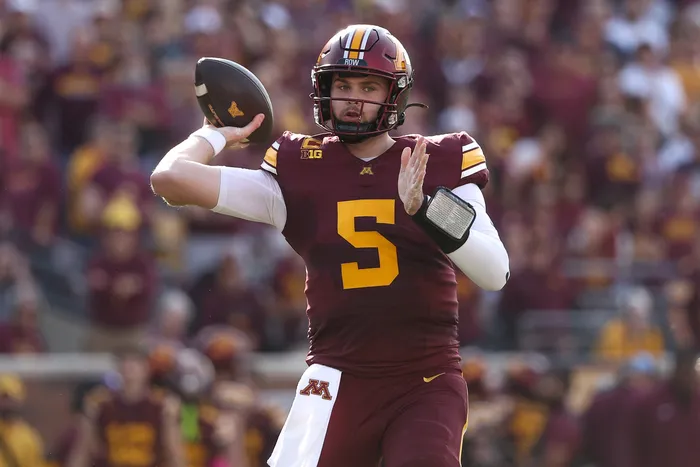
Indiana’s defense faces a challenge in Seattle that cannot be solved by assigning one cornerback to one wide receiver. Washington’s Chris Lawson is the immediate big-play threat, but quarterback Demond Williams Jr. is the player who can turn a sound defensive call into a breakdown when the pass rush loses contain or the secondary abandons coverage.
Why Lawson demands attention
Lawson caught five passes for 124 yards and two touchdowns in Washington’s 21–14 victory at Michigan State. It was his third 100-yard receiving game in four outings. His 58-yard first-quarter touchdown and 17-yard second-quarter score came from Williams, who finished 22-of-33 for 288 yards and two touchdown passes. Lawson averaged 24.8 yards per catch and accounted for more than 43 percent of Washington’s passing yardage.
That is the danger: Washington does not need to complete ten passes to Lawson to change the game. One missed leverage assignment, one defender caught looking into the backfield, or one uncovered receiver during an extended play can produce a touchdown.
Coach’s Clicker: Williams makes the coverage rules matter
Williams can move outside the pocket while keeping his eyes downfield. His mobility forces defenders to make split-second decisions: stay with the receiver or attack the quarterback? Indiana’s secondary cannot come off coverage merely because Williams breaks the pocket. Until he crosses the line of scrimmage, he remains a passing threat. If a defensive back drives downhill too soon, Williams can throw over that defender into the vacated space for an explosive play.
The coaching point is not to ask defensive backs to ignore the run. It is to make sure everyone understands who owns quarterback contain, who replaces that defender if he must close, and how receivers are passed off during scramble situations. A corner or safety cannot freelance when the quarterback extends a play.
Rush-lane integrity: pressure without escape lanes
Indiana’s front must rush with coordinated leverage. Edge defenders cannot run so far upfield that Williams can escape underneath. Interior rushers must avoid opening a straight lane through the middle. The objective is to compress the pocket, keep Williams on a predictable launch point and make him throw against intact coverage.
Michigan State limited Washington to 44 team rushing yards and Williams to 19 net rushing yards, yet still surrendered 288 yards through the air. That is a useful warning: limiting the quarterback’s running statistics does not mean the passing danger has been eliminated.
What Indiana must accomplish
- Bracket the explosive threat: Know Lawson’s alignment and route tendencies, and protect against deep shots without conceding easy underneath completions.
- Rush as a unit: Set the edges, compress interior space and avoid independent rush paths that create an exit.
- Stay in coverage: Defensive backs must remain attached to receivers through the scramble drill and communicate any exchange.
- Make Washington drive the field: Force multiple successful snaps rather than giving up a 50-yard play on one lapse.
- Finish on third down: Don’t allow a well-defended play to become a conversion because coverage breaks after the initial read.
Coach Griff’s Final Word
Lawson is the receiver Indiana must locate before every snap. Williams is the quarterback who makes that responsibility last until the whistle. The Hoosiers have the defensive talent to win this matchup, but talent alone will not be enough. The front must maintain disciplined rush lanes, and the secondary must stay in coverage. Do not let Williams’ legs create an explosive play with his arm.