Indiana Football PFF Report Card: What Seven Games Reveal About the Hoosiers
Through seven games, Indiana’s PFF position grades tell two different stories. The Hoosiers have high-performing skill-position players and a productive defensive front. But the gap between those strengths and the blocking grades of the offensive line and tight ends deserves closer examination as Indiana prepares for Michigan.
How to read these grades
The following position composites are custom snap-weighted calculations from season-to-date PFF player grades, not official PFF position-group grades. They provide a useful descriptive comparison but should not be confused with PFF’s own cumulative grading methodology. A PFF grade is not a traditional percentage.
Offensive position report card
| Position | Custom composite | Assessment |
|---|---|---|
| Quarterback | 83.9 | Strong |
| Running backs | 79.1 | Strong |
| Wide receivers | 78.4 | Strong |
| Offensive line | 68.7 | Inconsistent |
| Tight ends | 49.9 | Major concern |
Skill players are not the primary concern
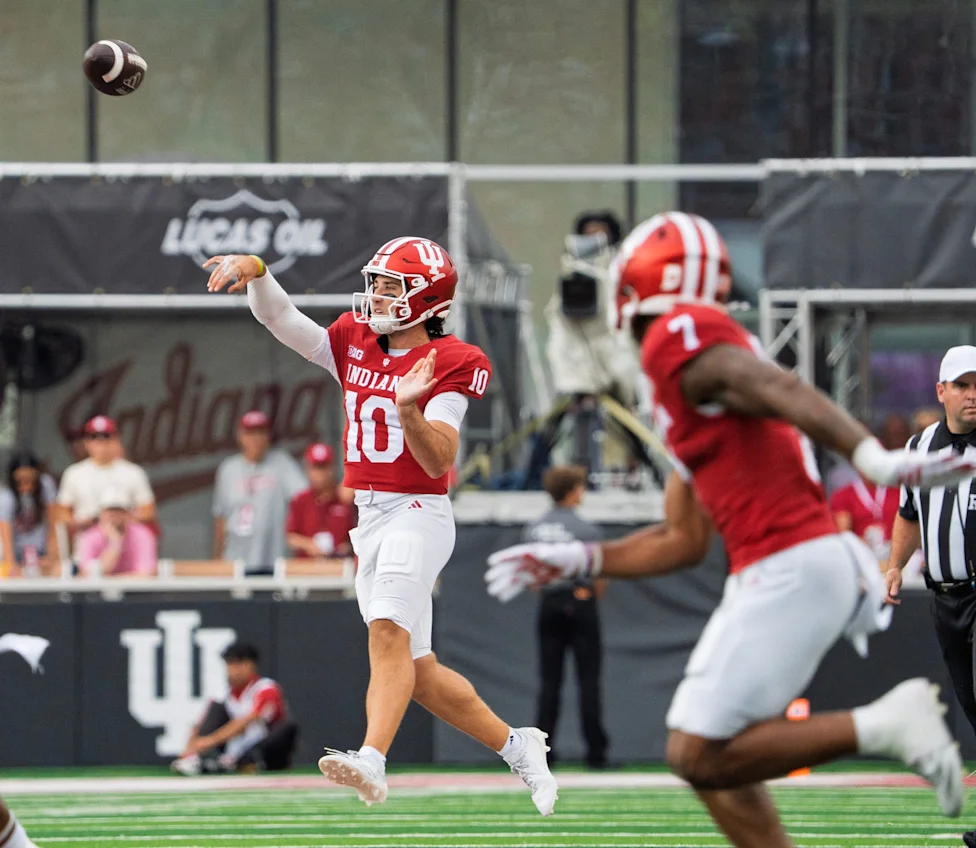
Charlie Becker (89.8), Turbo Richard (85.6), Josh Hoover (84.8) and Nick Marsh (82.0) have produced some of Indiana’s strongest cumulative grades. Hoover’s passing grade of 82.0 is encouraging, but no cumulative grade erases missed reads or execution errors in high-leverage situations. The film still matters.
The blocking disconnect
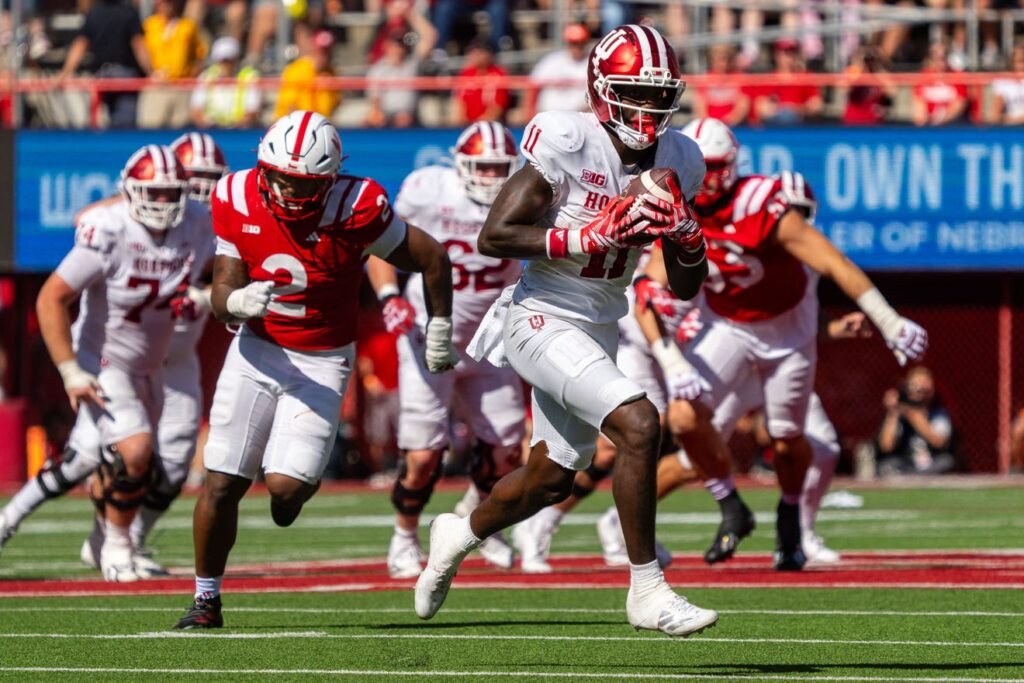
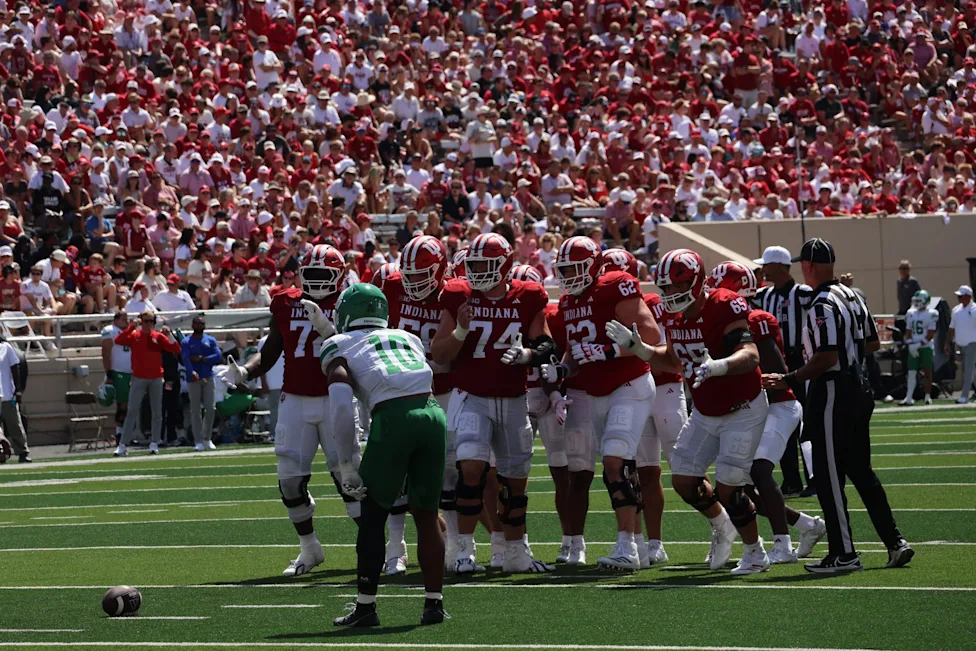
Indiana’s offensive line composite of 68.7 and tight end composite of 49.9 stand in sharp contrast to the backs and receivers. The primary offensive linemen’s run-blocking grades have ranged from 59.4 to 69.6. Tight ends Trevor Gibbs (46.3 overall), Brock Schott (51.8) and Andrew Barker (52.7) warrant particular attention when evaluating the edge of the run game.
Those grades raise questions about point-of-attack execution, combination blocks, backside assignments, defensive box counts and whether the offense is doing enough with formations, motions and complementary perimeter concepts. They do not, by themselves, establish whether a particular play call was wrong.
Defensive position report card
| Position | Custom composite | Assessment |
|---|---|---|
| Interior defensive line | 74.6 | Strongest defensive group |
| Edge defenders | 71.3 | Strong |
| Linebackers | 70.6 | Solid |
| Cornerbacks | 68.1 | Mixed |
| Safeties | 66.1 | Needs improvement |
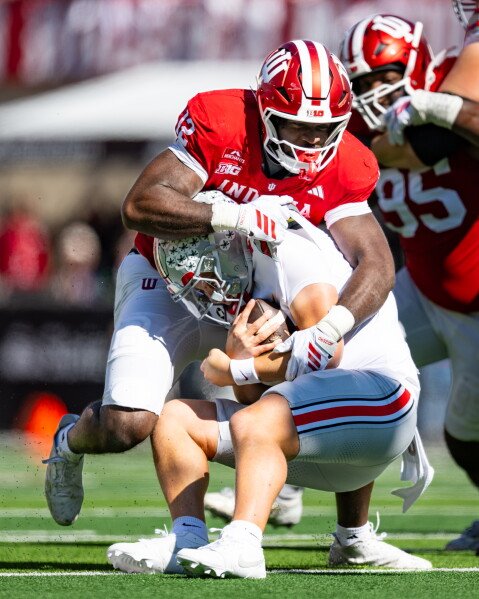
Joe Hjelle (81.4 overall), Stephen Daley (79.9) and Tobi Osunsanmi (76.3) highlight the front-seven performance. Hjelle’s 82.5 run-defense grade and Osunsanmi’s 79.2 pass-rush grade illustrate different ways the front can influence a game. The lower coverage-unit composites suggest an important area to monitor against Michigan, particularly when Indiana must balance pressure with rush-lane integrity and sound coverage.
What to examine on film
The next layer of this evaluation is to separate offensive line run blocking from pass protection, compare both with the tight ends’ run-blocking grades, and identify which failures are technical, assignment-related or schematic. On defense, individual coverage, tackling and pressure grades will sharpen the picture beyond overall grades.
Griff’s Final Take: Is It Execution, Scheme, or Both?
Through seven games, Indiana’s PFF grades reveal an interesting contrast. The Hoosiers have high-performing skill-position players, including quarterback Josh Hoover, running back Turbo Richard, and receivers Charlie Becker and Nick Marsh. Yet the offensive line and tight ends have not demonstrated the same consistency.
That raises a fundamental coaching question: Are Indiana’s running-game struggles primarily the result of poor execution, predictable offensive design, or a combination of both?
The PFF grades identify a performance concern, but they don’t tell the entire story. To answer that question, we need to examine the offensive line’s run-blocking grades separately from its pass-protection grades, then evaluate the tight ends’ effectiveness at the point of attack. We also need to study defensive box counts, blocking assignments, formation tendencies, motion, and the variety of running plays being called.
Indiana has relied heavily on inside zone and duo concepts. Those are effective plays when executed properly, but against physical defensive fronts, an offense must find ways to challenge defenders horizontally as well as vertically.
The solution isn’t necessarily changing personnel or abandoning the offensive system. It’s identifying where execution must improve and where offensive creativity can put those players in better positions to succeed.
The numbers provide evidence. The film provides context. And the responsibility for improvement belongs to both the players and the coaching staff.
— Coach Griff
Fast, Physical & Relentless.
Source: 2026 Indiana PFF offense and defense season summary exports through seven games. Special teams grades are not included.