392 Yards, Three Phases of Failure: Indiana’s Missed Opportunities Prove Costly at Washington
By Coach Shannon Griffith | Hoosier Football Tailgate
SEATTLE — Indiana’s 27–24 overtime loss to Washington wasn’t about one missed field goal, one blown coverage or one quarterback decision. It was a collective failure to execute in all three phases when execution mattered most.
Indiana accumulated 392 yards, made explosive touchdown plays, recorded four sacks and held Washington to negative yardage in overtime. Yet the Hoosiers still lost. Yardage does not automatically translate to points; defenses must deliver stops at decisive moments; and special teams must finish opportunities.
OFFENSE: 392 YARDS, BUT WHERE WAS THE CONSISTENCY?
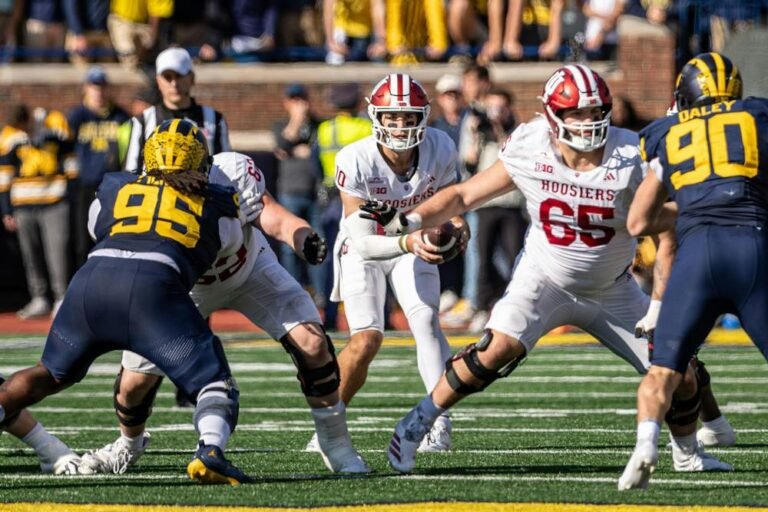
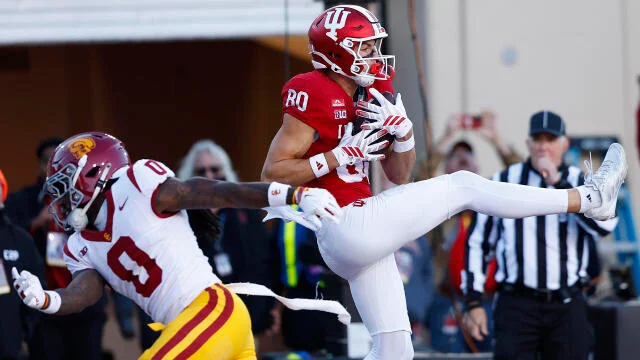
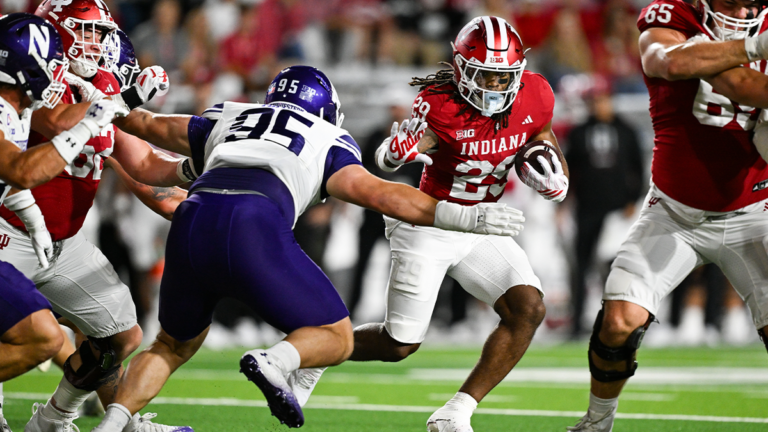
Indiana produced 392 yards—152 rushing and 240 passing—but only 16 first downs and a disastrous 2-of-15 on third down. That 13.3 percent conversion rate tells the story better than the yardage total. The Hoosiers had explosive touchdown passes, including Grant Wilson’s 74-yarder to Charlie Becker and Josh Hoover’s 35-yard strike to Nick Marsh, but those two plays accounted for 109 passing yards. The offense never established sustained control of the game. Lee Beebe Jr. led the ground attack with 94 yards, yet Indiana’s 37 carries for 152 yards did not consistently create manageable third downs. The offense needs a more varied run menu, including perimeter concepts and designed quarterback runs when Wilson is in the game.
THE OFFENSIVE LINE INJURY PROBLEM
Joel Brunner is already out for the season. Bray Lynch left the Washington game and did not return, although Ajani returned after his own exit. If Lynch cannot play, Indiana could be without two of five starters up front. That is 40 percent of the line and a serious challenge for protection communication, combination blocks and offensive continuity. Injuries help explain the difficulty, but they cannot excuse repeated failures to execute.
QUARTERBACKS: EXPLOSIVES WITHOUT SUSTAINED EXECUTION
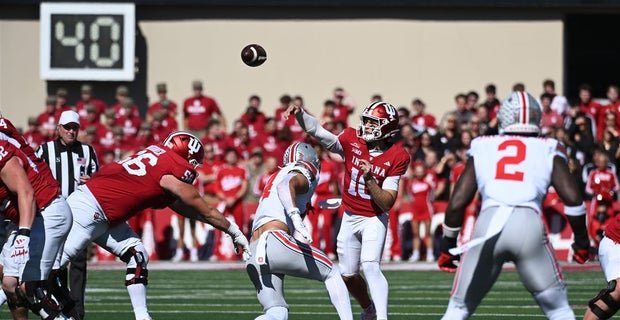
Cignetti replaced Wilson with Hoover. Wilson went 8-for-16 for 119 yards; Hoover went 7-for-13 for 121 yards. Both delivered a touchdown pass and neither threw an interception. Neither, however, solved the third-down problem. The quarterback decision cannot be separated from protection, route execution and the run game. Indiana needs a complete offense, not just an occasional explosive completion.
DEFENSE: TOO MANY YARDS, TOO MANY CHEAP PLAYS
Washington amassed 443 yards, including 189 rushing and 254 passing, marking a second consecutive game in which Indiana allowed more than 400 total yards. Demond Williams Jr.’s 65-yard touchdown run illustrated the damage a mobile quarterback can inflict when run fits, pursuit angles and leverage break down. Indiana recorded four sacks but also committed three penalties totaling 45 yards. Giving away nearly half a football field on penalties is not consistent with championship-level defensive discipline.
THE FOURTH-QUARTER STOP THAT NEVER CAME
Indiana led 24–17 after Hoover connected with Marsh with 9:06 remaining. That was the moment for the defense to close the door. Instead, Washington eventually drove 74 yards in seven plays, with Williams finding Decker DeGraaf for a 20-yard touchdown with 3:34 left. The tying touchdown came on a costly coverage breakdown. A defense with championship aspirations must protect a seven-point lead in the fourth quarter. Indiana did not.
OVERTIME: DEFENSE ANSWERS, OFFENSE DOES NOT
Indiana’s defense responded in overtime, holding Washington to minus-three yards and forcing a 46-yard field goal. Washington converted for a 27–24 lead. Indiana then went three-and-out, leaving Paddy McAteer to attempt a field goal to force a second overtime. The kick missed wide left. The contrast was stark: the defense delivered the necessary stop, but the offense and kicking operation could not capitalize.
SPECIAL TEAMS: TWO MISSED OPPORTUNITIES
Indiana made only one of three field-goal attempts. Nico Radicic’s attempt in regulation was tipped after a low trajectory allowed the defense to get a hand on the ball. Cignetti changed kickers; McAteer converted from 34 yards in the third quarter, then missed the overtime attempt wide left. The kicking operation includes snap, hold, protection, timing, trajectory and accuracy. These details are not peripheral in November; they can decide the season.
CIGNETTI’S STANDARD: PRODUCTION, NOT FEELINGS
Cignetti’s message earlier in the week emphasized production and accountability in an era when college athletes are compensated. That standard applies to every position and to the coaching staff. Changing quarterbacks and kickers demonstrates a willingness to make difficult decisions, but personnel changes alone do not guarantee results. Players must execute and coaches must put them in the best position to succeed.
COACH GRIFF’S FINAL TAKE
Indiana did not need a perfect game to win in Seattle. A few more third-down conversions, a fourth-quarter defensive stop, cleaner coverage or a converted field goal could have changed the outcome. Instead, the Hoosiers leave at 9–2 with their postseason margin for error sharply reduced. The offense is inconsistent, the defense has surrendered back-to-back 400-yard games, special teams remain unreliable and offensive line injuries are mounting. Indiana doesn’t need excuses. It needs answers—and Purdue is next.
Coach Shannon Griffith is host of Hoosier Football Tailgate and lead football analyst for TheHoosier.com.