Indiana’s Missing Third Phase: What Happened to the Hoosiers’ Special Teams Advantage?
By Coach Shannon Griffith | Hoosier Football Tailgate
Indiana is 8–1, yet its special teams have lost much of the advantage they provided during Curt Cignetti’s first two seasons. With the offense also struggling, the defense has been left to carry too much of the burden. Football has three phases, and championship teams must execute in all three.
Three Seasons of Special Teams
| Category | 2024 | 2025 | 2026* |
|---|---|---|---|
| Punt-return average | 12.8 | 16.6 | 11.4 |
| Punt-return yards | 346 | 414 | 80 |
| Recorded punt returns | 27 | 25 | 7 |
| Field goals | 10/11 | 19/21 | 13/20 |
| Field-goal percentage | 90.9% | 90.5% | 65.0% |
| Gross punting | 42.4 | 42.5 | 39.6 |
| Net punting | 39.1 | 39.6 | 37.1 |
*2026 figures through nine games; earlier seasons are full-season totals. Final prepublication statistical reconciliation is recommended.
The biggest warning sign is field-goal accuracy, down roughly 25 percentage points from the previous two seasons. The punting averages and return production also show a declining edge in hidden yardage.
2025: A Championship Weapon
Special teams were a genuine source of explosive plays during Indiana’s 2025 national championship season. The Hoosiers blocked four punts, including plays against Kennesaw State, Illinois, Oregon and Miami. D’Angelo Ponds returned the Illinois block for a touchdown. Daniel Ndukwe’s blocked punt against Oregon in the Peach Bowl set up a score. In the National Championship Game, Mikail Kamara blocked a Miami punt and Isaiah Jones recovered it in the end zone for a touchdown.
Those were not ordinary punt returns. They were block-and-return plays, an important distinction when interpreting return-touchdown statistics. But they all demonstrate the same point: Indiana’s third phase actively changed games.
Where Have the Returns Gone?
Indiana recorded 414 punt-return yards on 25 returns in 2025, compared with 80 yards on seven returns through nine games in 2026. Opponent punting strategy is part of the explanation, but the coaching staff must also evaluate return alignment and decision-making.
When a returner sets up too deep and lets a punt land and roll another 10 to 15 yards, the offense pays the price. The return team should chart the punt’s landing point, the returner’s depth and the final field position. Hidden yards are still yards.
The Punt-Block Threat
Four blocked punts in 2025 reflected an aggressive, well-prepared unit. Indiana must evaluate whether opponents have adjusted protections, whether personnel have changed or whether the Hoosiers’ own pressure approach has become less disruptive. Even pressure without a block can hurry the punter and affect distance and coverage.
Kicking: Diagnose the Entire Operation
Nico Radicic had been highly dependable in the previous two seasons, including perfect extra-point totals of 69-for-69 in 2024 and 86-for-86 in 2025. This season’s inconsistencies require analysis of each component: snap, hold, protection, timing and the kick itself. Paddy McAteer has also handled longer attempts, so raw percentages alone do not fairly describe the difficulty of every kick.
Minnesota: Almost a Costly Collapse
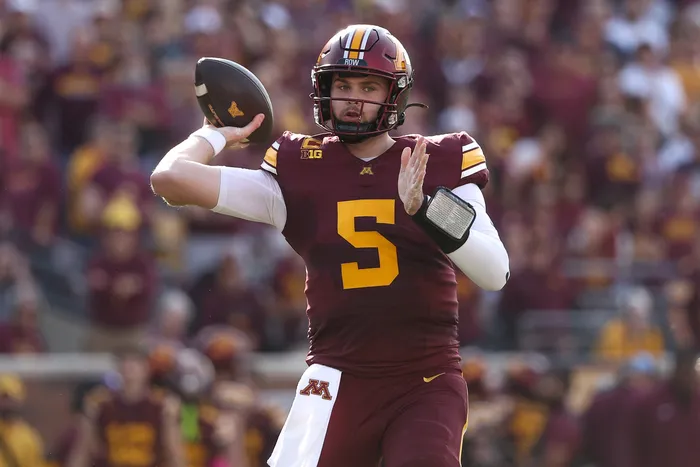
Against Minnesota, Billy Gowers had punts of only 15 and 27 yards, helping give the Gophers short fields. Radicic had a 52-yard attempt blocked and missed from 31 yards; a separate botched snap-and-hold sequence prevented another attempt. These were different breakdowns requiring different coaching corrections.
And yet, with Indiana trailing 16–13 in the closing seconds, McAteer made a remarkable 60-yard field goal to force overtime. Grant Wilson connected with Charlie Becker for the winning overtime touchdown, and Indiana’s defense closed out the 23–16 win. One spectacular kick saved the day, but it did not erase the unit’s broader struggles.
What the Bye Week Must Address
Start with punt-return alignment and field-position losses. Examine every punt for operation time, protection, hang time, direction and net result. Break down every field-goal and PAT failure by the actual source of the mistake. Compare the current punt-block packages with the successful 2025 approach. Finally, evaluate personnel assignments and whether practice repetitions reflect real game pressure.
Coaching Accountability Applies to Every Phase
These are not merely player-execution questions. Coaches are responsible for teaching, personnel, scheme and corrections when mistakes recur. The staff must evaluate its own decisions without allowing egos to interfere. Indiana’s defense has repeatedly rescued games; the offense and special teams must start complementing that effort.
Coach Griff’s Final Take
The fact that Indiana is 8–1 and came within inches of a different outcome against Ohio State is a tribute to the toughness and grit of this team. But toughness should not be required to overcome preventable mistakes every Saturday. The bye week is the opportunity to make Indiana a complete football team again. If the offense and special teams rise to the defense’s standard, the Hoosiers can still accomplish something special in November.