Indiana Must Play Its Way Out of Its Offensive Funk — And Minnesota Won’t Make It Easy
By Coach Shannon Griffith | Hoosier Football Tailgate | October 27, 2026
Three difficult weeks have exposed Indiana’s offensive limitations. Now the Hoosiers face a Minnesota team with three impressive conference victories, a dangerous defense and an opportunity to make a statement of its own.
There comes a point during a football season when talking about correcting mistakes is no longer enough. You can watch film, adjust formations, install new concepts and emphasize fundamentals. But eventually, the only way to get yourself out of an offensive funk is to play your way out of it.
That is precisely where Indiana finds itself entering Saturday’s matchup with Minnesota.
The Hoosiers are 7–1, coming off an emotional 13–6 overtime victory at Michigan. They remain firmly in the Big Ten championship conversation. But the offense has not resembled the unit that generated so much excitement earlier in the season. For the better part of three games—against Nebraska, Ohio State and Michigan—Indiana has struggled to establish consistent offensive rhythm. The running game has been inconsistent. The passing attack has been difficult to execute against physical defensive fronts. Too many promising possessions have ended without touchdowns.
Indiana’s defense has continued to answer the bell. That formula has kept the Hoosiers competitive, but it is not sustainable if Indiana expects to compete for a Big Ten championship and make a serious College Football Playoff run. And the opponent coming to Bloomington Saturday is considerably more dangerous than its 5–2 record suggests.
Minnesota Has a Résumé That Deserves Respect
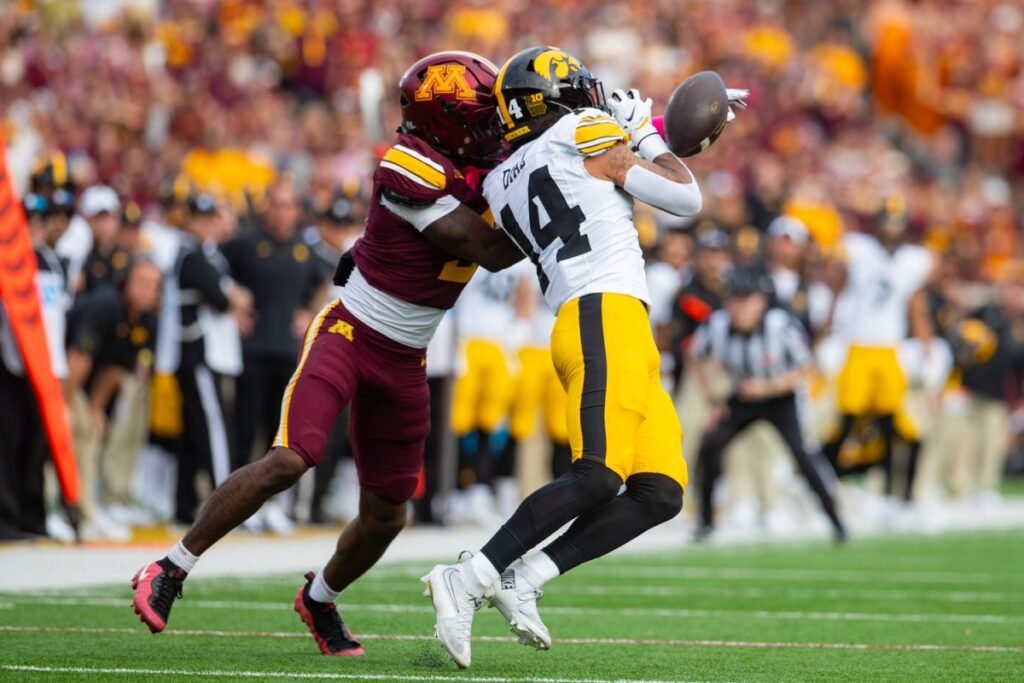
P.J. Fleck’s Golden Gophers have won three of their last four games, beating Washington, Michigan and Iowa. Minnesota defeated Washington 27–24 on the road, Michigan 20–14 and Iowa 13–10. The only interruption was an ugly 41–13 defeat at Purdue.
How does a team capable of beating Washington, Michigan and Iowa get dominated by Purdue? That question should be at the center of Indiana’s preparation. Against Iowa, Minnesota generated just 209 total yards and converted only two of 14 third-down opportunities. Yet the Gophers won, forcing four turnovers and making the critical plays.
Minnesota still faces a difficult road to the College Football Playoff with two losses, but a victory over Indiana would significantly strengthen its résumé. Saturday represents a major opportunity for Fleck’s program. And Indiana is the target.
The Numbers Reveal Two Very Different Minnesota Defenses
| Opponent | Result | Total yards allowed | Rushing allowed | Passing allowed |
|---|---|---|---|---|
| Washington | W 27–24 | 279 | 40 | 239 |
| Michigan | W 20–14 | 180 | 79 | 101 |
| Purdue | L 13–41 | 464 | 305 | 159 |
| Iowa | W 13–10 | 288 | 90 | 198 |
In its three victories, Minnesota allowed an average of 249 total yards and fewer than 70 rushing yards per game. Against Washington, the Gophers limited the Huskies to 40 rushing yards. Against Michigan, they surrendered only 180 total yards. Against Iowa, they held the Hawkeyes to 90 rushing yards while creating four turnovers.
Then came Purdue. The Boilermakers ran for 305 yards and accumulated 464 yards of total offense. Minnesota allowed 209 combined rushing yards against Washington, Michigan and Iowa—but 305 rushing yards against Purdue alone. Minnesota’s defense is capable of outstanding performances, but the Purdue game revealed vulnerabilities that demand further film study.
Purdue Exposed Minnesota — With a Former Golden Gopher Leading the Way
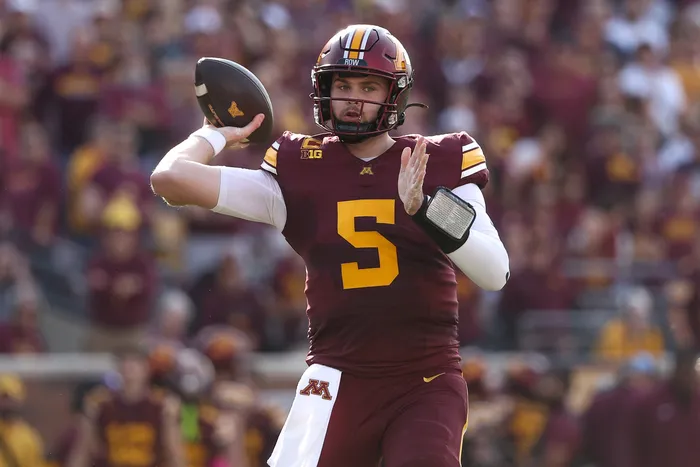
Purdue running back Fame Ijeboi transferred from Minnesota to Purdue following the 2025 season. Against his former teammates, he carried 31 times for 195 yards and three touchdowns, averaging 6.3 yards per carry. Purdue quarterback Ryan Browne added 81 rushing yards and a touchdown. The Boilermakers controlled possession for more than 37 minutes and won 41–13.
Indiana cannot simply assume it can duplicate Purdue’s performance. Personnel and blocking schemes differ. But the game provides a blueprint for film study. What concepts created movement? How did Purdue attack the linebackers? Did formations and motion create favorable numbers? How much of the success came from the threat of the quarterback run?
Those questions deserve a detailed examination in Coach Griff’s Video Room during Thursday’s Hoosier Football Tailgate preview.
Indiana’s Offensive Funk: Three Games That Have Raised Questions
Indiana’s problems did not begin at Michigan. Against Nebraska, the Hoosiers struggled at times to sustain drives and capitalize on favorable scoring opportunities. Against Ohio State, Indiana faced a physical defensive front that challenged its ability to run and protect the quarterback. Then came Michigan: just 212 total yards, including 81 passing yards from Josh Hoover, and six points in regulation before Indiana scored in overtime.
To its credit, the offense made the necessary plays when the game was on the line. But the larger problem remains. Indiana has not consistently controlled the line of scrimmage or generated the offensive balance that made it so effective earlier in the season.
The Running Game Must Become More Diverse
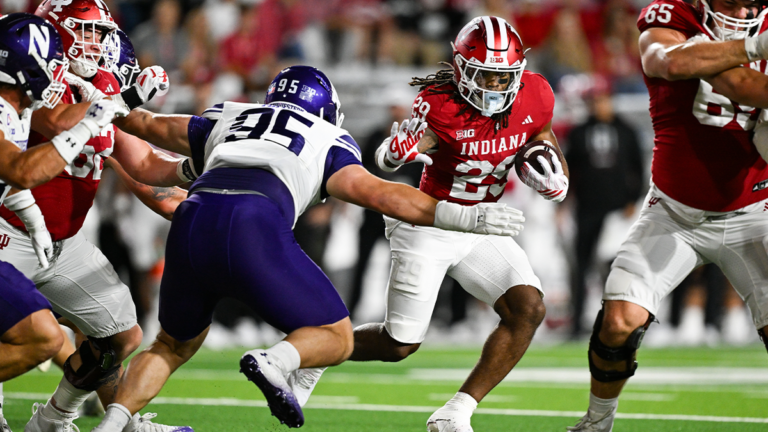
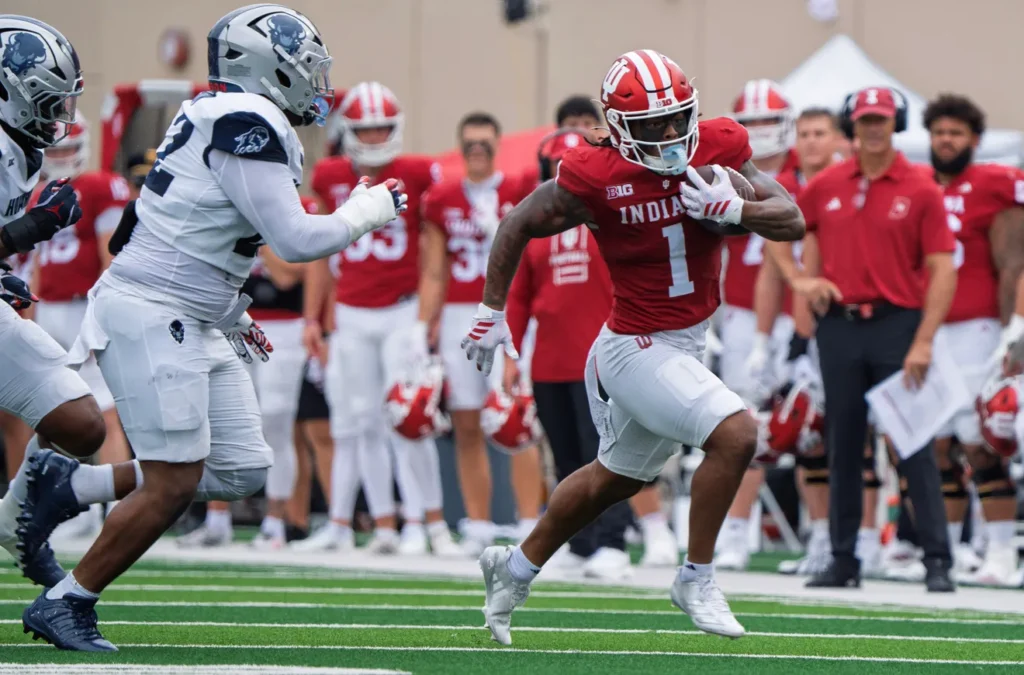
Indiana has relied heavily on inside zone and duo concepts. Those are foundational running plays, but predictability becomes a problem against disciplined, physical defensive fronts. Defenses can attack familiar blocking combinations and force unfavorable down-and-distance situations.
Indiana must challenge Minnesota across the entire width of the field: perimeter runs, counters, misdirection and opportunities to create favorable blocking angles. The Hoosiers need to make linebackers hesitate rather than allowing them to attack downhill. The objective is not to abandon Indiana’s offensive identity; it is to expand the ways Indiana executes that identity.
Josh Hoover’s Health Adds Another Complication
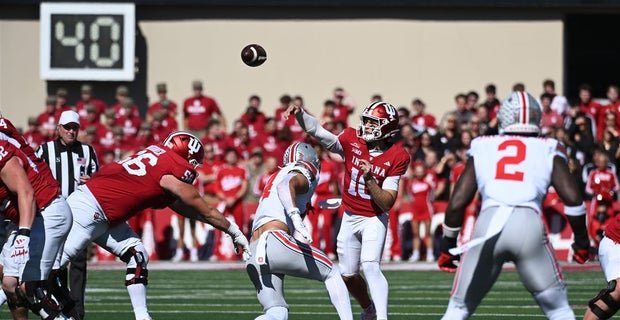
Hoover injured his throwing arm against Ohio State and was not physically at full strength against Michigan. During Monday’s press conference, Curt Cignetti expressed confidence that Hoover would be healthier entering the Minnesota game. That is encouraging, but quarterback health is not the only issue. Receivers must create separation, the offensive line must protect and the running game must prevent the entire offensive burden from falling on Hoover.
Could Khobie Martin Provide Another Option?
The potential involvement of Khobie Martin in the tailback rotation is worth monitoring. If Martin is physically ready and has earned the coaching staff’s confidence, he could provide additional depth and flexibility. His involvement would not automatically solve Indiana’s rushing problems, but another productive option could help establish a more effective rotation.
The 19.5-Point Spread Doesn’t Tell the Whole Story
Indiana enters Saturday’s game as approximately a 19.5-point favorite. On paper, that suggests a comfortable victory. But Minnesota has beaten quality opponents, is playing with confidence after its victory over Iowa and has a defense capable of creating turnovers and controlling field position. Indiana is trying to regain offensive consistency while its quarterback recovers from an injury. Those factors create the possibility of a more competitive game than the spread suggests.
Indiana has the talent to win decisively. But if the Hoosiers continue struggling to establish rhythm, Minnesota has the defensive personnel and experience to make the afternoon uncomfortable.
Coach Griff’s Five Things That Matter
1. Indiana must play itself out of its offensive funk
There is no shortcut. The Hoosiers must establish rhythm, execute assignments and regain confidence through successful possessions.
2. The offensive line must establish the running game
Indiana cannot allow Minnesota to dictate the point of attack. More diverse rushing concepts and better execution are essential.
3. Protect Josh Hoover while restoring the passing attack
A healthier Hoover should help, but improved protection, receiver separation and manageable down-and-distance situations are equally important.
4. Study what Purdue did successfully
Purdue demonstrated that Minnesota can be vulnerable against a physical, productive rushing attack. Indiana must identify which concepts fit its personnel.
5. Don’t give Minnesota opportunities to steal possessions
The Gophers forced four turnovers against Iowa. Indiana must protect the football, execute in the red zone and avoid special teams mistakes.
Coach Griff’s Final Word: The Time for Talking Is Over
Indiana has earned its position among the nation’s best teams. The Hoosiers have demonstrated resilience, toughness and the ability to win difficult games. But there is a difference between surviving and consistently playing winning offensive football.
Over the past three games, Indiana’s defense has carried an enormous responsibility. Now it is time for the offense to respond. Minnesota is coming to Bloomington with three impressive conference victories, postseason aspirations and an opportunity to make another statement.
For Indiana, Saturday represents a chance to regain offensive confidence and demonstrate that the struggles of the past three games do not define this team. The Hoosiers do not need another week of explanations. They need execution, physicality and offensive balance.
Because the only way Indiana is going to get out of this offensive funk is to play its way out of it.
Fast. Physical. Relentless.
Coach Shannon Griffith is a former college football head coach with 28 years of collegiate coaching experience and host of Hoosier Football Tailgate.